Saturday, June 17, 2006
Discovery: Nevada Chestertonians
I met Jim's Dad last night after the play. His son convinced him to come to the conference, and he was glad he came.


Surprise!
The play was fantastic. Wow. To see something of Chesterton's performed live was a special treat. Plus, the play proves the depth of his mind. Two plays within a play. The actors were really terrific, and all did wonderfully well.
The depth of the meaning of the play was much more evident from watching and hearing it (to me) than from reading it, so I was particularly glad I got a lot more out of the live version.
Not only that, but the pregnant pauses after the particularly funny lines drew tons of laughter. I was wiping my eyes several times. The actors were not shy, shall we say, about putting their *all* into this acting.
And it must have been a real challenge for the actors, because they basically had to perform the same play twice (the first and second act) with changes, but with some very similar similarities, which would have caused confusion in my mind as an actor, had I been one. So, I commend them that there was only one line forgotten, and that was almost Dales, but it turned out to be Kevin's.
Here is the cast:
Spearholder: Dale Ahlquist
Friar: Nathan Allen
Author: Jeremy Stanbary
Princess of Garfagnana: Ashley Ahlquist
Maria Margarita: Catherine Trojack
King of Fonatarabia: Julian Ahlquist
Poet: Kevin O'Brien
Captain of the Guard: Mark Pilon
Dale reported that it was very fun to be in the play with two of his children (who are adults).
Oh yes. The Joseph Pearce talk was very good, and I got to meet him tonight as well.
I forgot to mention that Carl Olsen is much taller than he appears to be on his blog.
The depth of the meaning of the play was much more evident from watching and hearing it (to me) than from reading it, so I was particularly glad I got a lot more out of the live version.
Not only that, but the pregnant pauses after the particularly funny lines drew tons of laughter. I was wiping my eyes several times. The actors were not shy, shall we say, about putting their *all* into this acting.
And it must have been a real challenge for the actors, because they basically had to perform the same play twice (the first and second act) with changes, but with some very similar similarities, which would have caused confusion in my mind as an actor, had I been one. So, I commend them that there was only one line forgotten, and that was almost Dales, but it turned out to be Kevin's.
Here is the cast:
Spearholder: Dale Ahlquist
Friar: Nathan Allen
Author: Jeremy Stanbary
Princess of Garfagnana: Ashley Ahlquist
Maria Margarita: Catherine Trojack
King of Fonatarabia: Julian Ahlquist
Poet: Kevin O'Brien
Captain of the Guard: Mark Pilon
Dale reported that it was very fun to be in the play with two of his children (who are adults).
Oh yes. The Joseph Pearce talk was very good, and I got to meet him tonight as well.
I forgot to mention that Carl Olsen is much taller than he appears to be on his blog.
Friday, June 16, 2006
Friday Evening
And now I must be off. First, to hear Joseph Pearce talk about Chesterton and Lewis, and then, the performance of The Surpise. I can't wait!
The Bibliographer of Chesterton's Work
You never could believe what a great talk someone could give about doing a bibliography of Chesterton's work. But Geir Hasnes has been working on this project for 21 years. He works like a detective, trying to collect every know piece of writing Chesterton ever wrote, as well as collecting the illustrations, sayings, post cards, pamphlets, speeches, debates, and even the movie that J.M.Barrie convinced Chesterton to act in (the movie, which was only a 10 minute silent film, is lost; but there are still pictures from it).
Hasnes told us that for the 30 years of Chesterton's writing life, from being hired to his death, he published what would be the equivalent of 3 works a week. That's between all of the books, essays, dust jackets, introductions and everything.
If one could estimate the number of words Chesterton wrote, Hasnes said between 20-30 million. And, Hasnes states, Chesterton rarely repeated himself, so everything he wrote is fresh and new.
Hasnes made the point that a Chesterton book is not a material possession like Da Vinci Code that you read once and throw away, but it is something you will read again and again, always finding something new and interesting in it. I liked that idea, naturally!
I found Geir here, he published a "lost" Father Brown mystery, The Mask of Midas here, and after having talked about Chesterton and fascinated his audience, and keeping us in stitches with his jokes told with a thick Norweigen accent, he was surprised by Dale Ahlquist, who presented him with a Chesterton Lifetime Achievement award and statuette. Geir was so touched by this that he broke down in tears (causing me to cry) and could not say much more than a very humble "Thank You." He is a truly dedicated and wonderful person.
Hasnes told us that for the 30 years of Chesterton's writing life, from being hired to his death, he published what would be the equivalent of 3 works a week. That's between all of the books, essays, dust jackets, introductions and everything.
If one could estimate the number of words Chesterton wrote, Hasnes said between 20-30 million. And, Hasnes states, Chesterton rarely repeated himself, so everything he wrote is fresh and new.
Hasnes made the point that a Chesterton book is not a material possession like Da Vinci Code that you read once and throw away, but it is something you will read again and again, always finding something new and interesting in it. I liked that idea, naturally!
I found Geir here, he published a "lost" Father Brown mystery, The Mask of Midas here, and after having talked about Chesterton and fascinated his audience, and keeping us in stitches with his jokes told with a thick Norweigen accent, he was surprised by Dale Ahlquist, who presented him with a Chesterton Lifetime Achievement award and statuette. Geir was so touched by this that he broke down in tears (causing me to cry) and could not say much more than a very humble "Thank You." He is a truly dedicated and wonderful person.
Friday Activities
I'm going to give you a few more highlights from today.
Father Jaki's talk on Charles Dickens and Charles Darwin: The Two Who Never Met was really fantastic. Jaki mentioned how the two were contemporaries, but certainly would never have seen eye to eye.
Dickens, Jaki informed us, cannot really be known from his novels. What was very informative to discover was that Dickens was the originator of the (London) Daily News, the very paper for which Chesterton would later get his start and write for regularly. In old copies of the Daily News, if we were priviledged to read them, we would have discovered a different Dickens, a man with opinions and thoughts about everyday life and subjects he could not explore in his novels.
Well, Jaki discovered that Dickens had once written a book review of Darwin's Origin of Species and through his grapevine of friends, was able to obtain a copy of that 3,000 word review. Jaki said that it seemed as though Dickens had read and thoroughly studied the book before he wrote the review, which he joked was a rare thing in book reviewing!
Dickens tore apart the Darwin book piece by piece. I wish I could remember it all or find it for you, I'll have to ask Jaki for a copy of that.
The main difference between Dickens and Darwin was that Dickens lived by a religious morality, and Darwin did not. Jaki pointed out the Dickens, in his last will, stated that he left himself in God's hands, though the saving power of Jesus Christ, certainly indicating he had faith. Jaki said Dickens faith seemed to be a broadchurch Anglican type.
Darwin, on the olther hand, had started out life enjoying poetry, prose, artwork, and music. Later, as he developed his theory of evolution, he despised poetry and hated to read Shakespeare, saying "it made him feel nauseous." Jaki used this example to show that when you focus in on something false like his "theory of everything" as Darwin believed, you really become more narrow, which I thought was a great point.
I purchased Jaki's Chesterton: A Seer of Science which Dr. Thursday highly recommended to me. The book is available through the Chesterton Society.
Father Jaki's talk on Charles Dickens and Charles Darwin: The Two Who Never Met was really fantastic. Jaki mentioned how the two were contemporaries, but certainly would never have seen eye to eye.
Dickens, Jaki informed us, cannot really be known from his novels. What was very informative to discover was that Dickens was the originator of the (London) Daily News, the very paper for which Chesterton would later get his start and write for regularly. In old copies of the Daily News, if we were priviledged to read them, we would have discovered a different Dickens, a man with opinions and thoughts about everyday life and subjects he could not explore in his novels.
Well, Jaki discovered that Dickens had once written a book review of Darwin's Origin of Species and through his grapevine of friends, was able to obtain a copy of that 3,000 word review. Jaki said that it seemed as though Dickens had read and thoroughly studied the book before he wrote the review, which he joked was a rare thing in book reviewing!
Dickens tore apart the Darwin book piece by piece. I wish I could remember it all or find it for you, I'll have to ask Jaki for a copy of that.
The main difference between Dickens and Darwin was that Dickens lived by a religious morality, and Darwin did not. Jaki pointed out the Dickens, in his last will, stated that he left himself in God's hands, though the saving power of Jesus Christ, certainly indicating he had faith. Jaki said Dickens faith seemed to be a broadchurch Anglican type.
Darwin, on the olther hand, had started out life enjoying poetry, prose, artwork, and music. Later, as he developed his theory of evolution, he despised poetry and hated to read Shakespeare, saying "it made him feel nauseous." Jaki used this example to show that when you focus in on something false like his "theory of everything" as Darwin believed, you really become more narrow, which I thought was a great point.
I purchased Jaki's Chesterton: A Seer of Science which Dr. Thursday highly recommended to me. The book is available through the Chesterton Society.
Marian Typology in Dicken's Dombey and Son
Wow. Jill Kriegel just gave a great talk about her master's thesis, which was about Dickens, and after providentially meeting Dale and Joseph Pearce 1 1/2 years ago at a Chesterton thing at Ave Maria (she lives in Florida) she was introduced to a Chestertonian view of Dickens. She won some top award for her thesis, and is going on for her PhD. She gave a great talk about Florence Dombey as a typological Mary figure and it was very good, and enjoyable to hear.
Mealtimes
One of the most fun times here at the conference is meal times.
This morning, I had a high need for caffeine, so I went to the cafeteria early to fuel up.
I met Geir Hasnes there, talking to Rob. Geir is giving a talk later today about his work as a bibliographer of Chesterton. We started talking about Chesterton and life, and whether our kids were Chestertonians or not, and about strict uber-Lutheran northern Norweigans, and then Father Jaki sat down with us and we continued to talk, quickly moving to the subject of Kristin Lavransdatter. Geir is Norweigan and Father Jaki is Danish, so that was interesting. They both appeared to be experts on the subject of Kristin Lavransdatter (I didn't know, for example, that she was an avid Chestertonian.) Then Kyro sat down, and while the Dane and the Norsk were talking across the table, we talked. Kyro asked if I'd heard of the Runestone found in Alexandria, MN (he happens to live near there) and we discussed that (I had discovered about it a few years ago and became fascinated by it and had formed an opinion that it must be real) and then moved on to the Shroud of Turin.
I think there were several other conversations in there, as well. Geir told us a funny story about how he impressed the British Library by informing them of how many signed First Editions of Chesterton's they were missing (over 50 at the time he visited) to which they are apparently working on remedying, or have.
I just get to meals early every time so that we have time for these wonderful conversations!
UPDATES?CORRECTIONS:
Father Jaki is Hungarian, not Danish.
Geir informed me that the British Library was not missing SIGNED First Editions, just First Editions. The reason the number was so high was because they hadn't been very aware of the Collected Works and some of the US compilations, and then some special items that Geir had discovered through working with Aidan Mackey, which Aidan had discovered.
This morning, I had a high need for caffeine, so I went to the cafeteria early to fuel up.
I met Geir Hasnes there, talking to Rob. Geir is giving a talk later today about his work as a bibliographer of Chesterton. We started talking about Chesterton and life, and whether our kids were Chestertonians or not, and about strict uber-Lutheran northern Norweigans, and then Father Jaki sat down with us and we continued to talk, quickly moving to the subject of Kristin Lavransdatter. Geir is Norweigan and Father Jaki is Danish, so that was interesting. They both appeared to be experts on the subject of Kristin Lavransdatter (I didn't know, for example, that she was an avid Chestertonian.) Then Kyro sat down, and while the Dane and the Norsk were talking across the table, we talked. Kyro asked if I'd heard of the Runestone found in Alexandria, MN (he happens to live near there) and we discussed that (I had discovered about it a few years ago and became fascinated by it and had formed an opinion that it must be real) and then moved on to the Shroud of Turin.
I think there were several other conversations in there, as well. Geir told us a funny story about how he impressed the British Library by informing them of how many signed First Editions of Chesterton's they were missing (over 50 at the time he visited) to which they are apparently working on remedying, or have.
I just get to meals early every time so that we have time for these wonderful conversations!
UPDATES?CORRECTIONS:
Father Jaki is Hungarian, not Danish.
Geir informed me that the British Library was not missing SIGNED First Editions, just First Editions. The reason the number was so high was because they hadn't been very aware of the Collected Works and some of the US compilations, and then some special items that Geir had discovered through working with Aidan Mackey, which Aidan had discovered.
Chesterton and Marshall McLuhan
John Peterson (whom incidentally, I noted Dale Ahlquist dedicated his newest book, Common Sense 101 to) gave the second talk last night. I didn't know a thing about Marshall McLuhan, didn't even recognize his name (now my ignorance is showing). And he did not recommend that we actually read McLuhan, he only showed how his work was/is influential in our culture. It was a very good talk.
Conference CDs
I wanted to mention that the conference is being recorded and put on CDs. Think how much fun it would be on a long car trip to listen to this, wow!
They are $75, and well worth it. You will be able to order them after the conference through the web site.
They are $75, and well worth it. You will be able to order them after the conference through the web site.
Abandon Hopelessness
Dale Ahlquist's excellent opening speech was about HOPE and how we need a lot more of it in this world. Hand in hand with that, we need joy. But his speech mainly was about hope, and that hope was what Chesterton found in Dickens, and Dickens, after all, is what the conference is mainly about.
The best quote of the speech, and this is not a direct quote for my memory isn't that good, was something like this:
On the day of Chesterton's acceptance into the Catholic Church, he sat somewhere and was reading the catechism. He got to a part where it said, "The two sins against hope are despair and presumption." and he realized in that moment, that that was what he'd been writing against all his career. He felt that the pessimists were those who despaired, and the optimists were those who presumed. The opposite of both these things is hope.
The best quote of the speech, and this is not a direct quote for my memory isn't that good, was something like this:
On the day of Chesterton's acceptance into the Catholic Church, he sat somewhere and was reading the catechism. He got to a part where it said, "The two sins against hope are despair and presumption." and he realized in that moment, that that was what he'd been writing against all his career. He felt that the pessimists were those who despaired, and the optimists were those who presumed. The opposite of both these things is hope.
Thursday, June 15, 2006
Arrival
OK, I've only just arrived, and I've already made a fool of myself twice.
But first, I should tell you that arriving this afternoon, my third year, was so fun, because I knew where I was going and what I was doing.
Second, because I finished my speech, and it turned out pretty good.
Third, I got a warm welcome already from Dale Alhquist "Mr. Chesterton" himself, and an even warmer welcome from Dr. Peter Floriani, a frequent poster on this blog, who finally got to meet my family. He looks great, and has a robust laughter that is just so contagious!
Also said Hi to Sean Dailey, our "Chestertonian" on the blog, and editor of Gilbert, he met the family, too.
So, my first embarrassment was that I couldn't get my room key to work. I finally humbled myself to ask for help, and a young person comes and instantly opens the door. I felt old and silly.
Then I got in my room, and pretty much first thing I turned on my computer, and.....YES!....there is wireless in this dorm room! Yeah for small pleasures. So, I get on my browser, and St. Thomas comes up and they want a user name and password. I call IT support, and while they have me on hold looking for guest log in passwords, I see a tiny button at the bottom of the screen which says "guests sign in here" so I do and before the guy can get me off "HOLD" here I am. I had to apologize to him, too.
My girls want to come back tomorrow night and see the play "The Surprise" (I see a number of you were searching for the text of that play in the last few days...could it be the conference made you wonder about it? Yes!) and even though it is late, I think they should. That would be such fun. My younger one said she was going to memorize The Ballad of the White Horse so she could come to the conference, but I told her that since another girl has that one, why shouldn't she take Lepanto? So, she started saying....Dim drums throbbing on the hills half heard....
OH! There are books, books, books! There are several vendors in the vendor hall all set up, and I've already seen several books on my wish list, so my next thing is to go buy some things that I have to have. One of the vendors is Sean's mom and dad who run St. John Fisher Forum Catholic Bookstore, which received an "Excellent" score at the Catholic Culture site review.
OK, I've got to go say HI to more friends old and new, and check out the books. Every year, I end up with a much heavier suitcase than when I came here.
UPDATE: We just had a meeting of the bloggers. Dr. Thursday, Sheila, and John are here! I'll try to get a picture.
But first, I should tell you that arriving this afternoon, my third year, was so fun, because I knew where I was going and what I was doing.
Second, because I finished my speech, and it turned out pretty good.
Third, I got a warm welcome already from Dale Alhquist "Mr. Chesterton" himself, and an even warmer welcome from Dr. Peter Floriani, a frequent poster on this blog, who finally got to meet my family. He looks great, and has a robust laughter that is just so contagious!
Also said Hi to Sean Dailey, our "Chestertonian" on the blog, and editor of Gilbert, he met the family, too.
So, my first embarrassment was that I couldn't get my room key to work. I finally humbled myself to ask for help, and a young person comes and instantly opens the door. I felt old and silly.
Then I got in my room, and pretty much first thing I turned on my computer, and.....YES!....there is wireless in this dorm room! Yeah for small pleasures. So, I get on my browser, and St. Thomas comes up and they want a user name and password. I call IT support, and while they have me on hold looking for guest log in passwords, I see a tiny button at the bottom of the screen which says "guests sign in here" so I do and before the guy can get me off "HOLD" here I am. I had to apologize to him, too.
My girls want to come back tomorrow night and see the play "The Surprise" (I see a number of you were searching for the text of that play in the last few days...could it be the conference made you wonder about it? Yes!) and even though it is late, I think they should. That would be such fun. My younger one said she was going to memorize The Ballad of the White Horse so she could come to the conference, but I told her that since another girl has that one, why shouldn't she take Lepanto? So, she started saying....Dim drums throbbing on the hills half heard....
OH! There are books, books, books! There are several vendors in the vendor hall all set up, and I've already seen several books on my wish list, so my next thing is to go buy some things that I have to have. One of the vendors is Sean's mom and dad who run St. John Fisher Forum Catholic Bookstore, which received an "Excellent" score at the Catholic Culture site review.
OK, I've got to go say HI to more friends old and new, and check out the books. Every year, I end up with a much heavier suitcase than when I came here.
UPDATE: We just had a meeting of the bloggers. Dr. Thursday, Sheila, and John are here! I'll try to get a picture.
Wednesday, June 14, 2006
The Annual Pilgrimage Begins
All across the country, and in some cases the world, people are now beginning to make their way to Minnesota. Not the natural place that first comes to mind when thinking about Gilbert (that would be England, but who can afford that? And after all, we are the American Chesterton Society {even though we do have some Canadians amongst us, but I suppose they are already, at this very moment, plotting and conniving to create their very own CCS...})
What's so special about Minnesota to American Chestertons? Gee, I really don't know my history. I know that at one time, there was a Midwest Chesterton Society, and that a lot of the people whom I've met at the annual conference were a part of that. The Pettas, John Petersen, The Bowens, and many more. Then Dale started coming to the meetings, and next thing you know, the whole sheebang got moved to his hometown. I don't know, but that sounds like empirialism to me. I'm sure there are parts I'm missing. I'll try to flesh out a better history while I'm there, and give you the details as I am able.
Another thing I want to check up on is what I call "Chestertonian Romances." People who met because of Chesterton. I know actually for a fact that that is how the Pettas for together, and I'm going to try and get their story if I can this trip. I hope to find a couple of others. Last year I noted something blossoming amongst a couple of our younger conferees, (see, you can find love and romance at even such a thing as a Chesterton Conference!) so I'll have to see what's going on with that this year.
Meanwhile, I know for sure that Dr. Thursday has already left and is at this moment driving across the country. We leave tomorrow am, and I know that another family leaves in the morning as well. May God grant us all safe journeys and a fruitful time at ChesterCon.
What's so special about Minnesota to American Chestertons? Gee, I really don't know my history. I know that at one time, there was a Midwest Chesterton Society, and that a lot of the people whom I've met at the annual conference were a part of that. The Pettas, John Petersen, The Bowens, and many more. Then Dale started coming to the meetings, and next thing you know, the whole sheebang got moved to his hometown. I don't know, but that sounds like empirialism to me. I'm sure there are parts I'm missing. I'll try to flesh out a better history while I'm there, and give you the details as I am able.
Another thing I want to check up on is what I call "Chestertonian Romances." People who met because of Chesterton. I know actually for a fact that that is how the Pettas for together, and I'm going to try and get their story if I can this trip. I hope to find a couple of others. Last year I noted something blossoming amongst a couple of our younger conferees, (see, you can find love and romance at even such a thing as a Chesterton Conference!) so I'll have to see what's going on with that this year.
Meanwhile, I know for sure that Dr. Thursday has already left and is at this moment driving across the country. We leave tomorrow am, and I know that another family leaves in the morning as well. May God grant us all safe journeys and a fruitful time at ChesterCon.
Tuesday, June 13, 2006
A Chestertonian Pill to Swallow

From the Collected Works, Volume Four, What's Wrong With the World? we have an interesting discussion about how to deal with the problems of society. I think this quote particularly apt, from Gilbert founder John Petersen.
"Chesterton insisted that we stop this initial focus on the remedy as if the body politic were a diseased patient in a hospital. He insisted that we begin instead by settling the question of what it is we want. We have to know what we are aiming for, what our goal is, or (to use Chesteron's word) what our ideals are. Unless we agree on the kind of society we think will be good, we have no chance of agreeing on the best policies to get us there."
Now this is, I believe, why our political discussions never get too far, and why our country is divided. We can't decide what it is that will be good for our society. We have a lot of ideas about how to fix various problems, but as Chesterton points out to us, we can't fix it until it's diagnosed.
Monday, June 12, 2006
Lepanto

I see that someone was searching for Lepanto commentary and found this site. I hope the person searching knows that this book, which includes the complete poem Lepanto as well as notes and commentaries that really help one to understand the poem and the times, is a wonderful book and I highly recommend it.
Good luck in your studies!
Favorite Part of Gilbert
What's your favorite column or section of Gilbert magazine?
I love the personal glimpses section, because it is like the Clemens book, people who knew GKC when he was alive and have memories of him.
I also always read the News with Views first, they are usually so funny (and frustrating, too, but still funny).
I also enjoy Chesterton's Mailbag, but now I've told you three things.
I love the personal glimpses section, because it is like the Clemens book, people who knew GKC when he was alive and have memories of him.
I also always read the News with Views first, they are usually so funny (and frustrating, too, but still funny).
I also enjoy Chesterton's Mailbag, but now I've told you three things.
Saturday, June 10, 2006
Favorite Book on Chesterton
Tom's idea (thanks) from the combox.
What is your favorite book on Chesterton?
Chesterton as Seen by His Contemporaries by C. Clemens is my personal favorite. I love all the anecdotal stories in there.
What is your favorite book on Chesterton?
Chesterton as Seen by His Contemporaries by C. Clemens is my personal favorite. I love all the anecdotal stories in there.
Friday, June 09, 2006
Favorite One Line
Now that you've told me your favorite book, do you have a farovite one line? Maybe one that isn't so frequently quoted?
What is Chesterton's best one line? Or, what one line jumped out at you as Chesterton's most profound?
What is Chesterton's best one line? Or, what one line jumped out at you as Chesterton's most profound?
Thursday, June 08, 2006
What's Your Favorite Chesterton work?
Just an informal survey, but what is your favorite Chesterton work? If you want to say why, that would be great, too.
My personal favorite is Lepanto. Because I love it. I love the rhyme, the rhythm, the musicality of it, I love the story, and the triumph of faith.
My personal favorite is Lepanto. Because I love it. I love the rhyme, the rhythm, the musicality of it, I love the story, and the triumph of faith.
Wednesday, June 07, 2006
Chesterton on immigration
I was listening to a radio debate today on the immigration so-called "crisis" and naturally, I knew that if Chesterton had a point of view on the subject, it would have really helped the radio show.
Does anyone know if Chesterton wrote something good about the immigration issue, and in what way it could help right now with this issue?
Does anyone know if Chesterton wrote something good about the immigration issue, and in what way it could help right now with this issue?
Tuesday, June 06, 2006
I Had a Dream....
Yes, I had a dream last night about the conference. It was awesome.
I'm sure this is a dream that will come true.
Right now, I'm trying to get some melodies down on paper. There is a song that I hope will be sung (and played on guitar, if there is one to borrow, or on the hammer dulcimer if Mark Pilon can do it). Dale Ahlquist wrote the words and it has something humorous to do with GKC. I always get the chorus the same, but I tend to play around with the notes of the verses. I need to pin it down if I expect people to sing along. It should be done by ChesterCon.
I'm sure this is a dream that will come true.
Right now, I'm trying to get some melodies down on paper. There is a song that I hope will be sung (and played on guitar, if there is one to borrow, or on the hammer dulcimer if Mark Pilon can do it). Dale Ahlquist wrote the words and it has something humorous to do with GKC. I always get the chorus the same, but I tend to play around with the notes of the verses. I need to pin it down if I expect people to sing along. It should be done by ChesterCon.
Saturday, June 03, 2006
Argent liked Gilbert's cover story
Dale Ahlquist's article on the visit to the monestary is mentioned in the linked article above.
Anagrams for Chesterton
My favorites:
Etches Torn
Center Shot
Recent Shot
Cost her ten
Torch Teens (but not really)
Notch reset
Cotter Hens
Crest the No
I can almost hear,
"Tally Ho! Crest the No!"
Etches Torn
Center Shot
Recent Shot
Cost her ten
Torch Teens (but not really)
Notch reset
Cotter Hens
Crest the No
I can almost hear,
"Tally Ho! Crest the No!"
An Interview with Dale Ahlquist
Go to the link above, click on Vital Signs radio interview, and you can hear a 10 minute interview with Dale.
You will need Real1 player (which you can download free off the web).
You will need Real1 player (which you can download free off the web).
Friday, June 02, 2006
The Story of the Father Brown Mystery Adaptations
From the com box, Chris asks what I mean by the Father Brown Mystery Adaptations.
Right from the start of my love for Chesterton, was a serious interest in sharing his writing with my children. However, they were too young really. I tried to get my daughter to read The Innocence of Father Brown, which I loved and thought would be a great introduction to his writing. Although she was an avid reader, she could not get into the Father Brown.
"OK," I said, "come on, I'll read it out loud to you."
Well, I had to keep stopping and explaining either a) an archaic way of speaking or b) a slang word in British English or c) just a British/American English difference. After attempting to read The Blue Cross out loud, I realized why my 10 year old couldn't get into it. I was frustrated, but not ready to give up.
Then I was in the library, and discovered a book in the children's section called "Step into Classics" Sherlock Holmes, now called Stepping Stone books. These are in essence, the same stories as Sir Arthur Conan Doyle wrote, but adapted so that younger readers can read them. I thought that I could do the same thing with Chesterton's work.
The idea is to excite the younger generation about a certain author, in my case, G.K. Chesterton, so that the name is familiar, and that down the line, say, in their teens, they will want to read the direct story, and then come to know and love Chesterton.
It was my idea to capture the imaginations of the younger children, so that they would read Chesterton readily when they are older. His name would be familiar to them and associated with something wonderful: a good mystery.
So, I began with The Blue Cross and eventually wrote that, The Strange Feet (Changed from "queer" due to the modern day interpretation of that word), The Flying Stars, and The Absence of Mr. Glass. After I'd finished the first four, I decided to try and find a publisher and an audience before I did any more.
Now, Hillside Education is planning to publish the first four books in a collection. The essential story is all still there. The difficult words are made easy, the British slang replaced with words an 8 year old will understand. The reading age range is 8-12. By 13 or 14, most teens can read directly from Chesterton's own words. But younger than that, the adaptation will be very useful.
In some ways, I hope also to evangelize the parents who right now consider Chesterton "too hard" or "too deep" as well. If they read the adaptations and see how great the stories are, they may be enticed to look for Chesterton's work in the library, or next time they're at the local book store.
So, that's my idea. Hillside has Ted Schluenderfritz on board as the illustrator, most people know that he is the artistic director for Gilbert magazine, as well, and quite familiar with illustrating Chestertonian works. I am thrilled to have him involved in the project.
This is something I've been working on for many years, and the thought of it finally becoming a reality is quite exciting. I really think this is going to open up the door for many, many more people to come to know and love Chesterton.
Right from the start of my love for Chesterton, was a serious interest in sharing his writing with my children. However, they were too young really. I tried to get my daughter to read The Innocence of Father Brown, which I loved and thought would be a great introduction to his writing. Although she was an avid reader, she could not get into the Father Brown.
"OK," I said, "come on, I'll read it out loud to you."
Well, I had to keep stopping and explaining either a) an archaic way of speaking or b) a slang word in British English or c) just a British/American English difference. After attempting to read The Blue Cross out loud, I realized why my 10 year old couldn't get into it. I was frustrated, but not ready to give up.
Then I was in the library, and discovered a book in the children's section called "Step into Classics" Sherlock Holmes, now called Stepping Stone books. These are in essence, the same stories as Sir Arthur Conan Doyle wrote, but adapted so that younger readers can read them. I thought that I could do the same thing with Chesterton's work.
The idea is to excite the younger generation about a certain author, in my case, G.K. Chesterton, so that the name is familiar, and that down the line, say, in their teens, they will want to read the direct story, and then come to know and love Chesterton.
It was my idea to capture the imaginations of the younger children, so that they would read Chesterton readily when they are older. His name would be familiar to them and associated with something wonderful: a good mystery.
So, I began with The Blue Cross and eventually wrote that, The Strange Feet (Changed from "queer" due to the modern day interpretation of that word), The Flying Stars, and The Absence of Mr. Glass. After I'd finished the first four, I decided to try and find a publisher and an audience before I did any more.
Now, Hillside Education is planning to publish the first four books in a collection. The essential story is all still there. The difficult words are made easy, the British slang replaced with words an 8 year old will understand. The reading age range is 8-12. By 13 or 14, most teens can read directly from Chesterton's own words. But younger than that, the adaptation will be very useful.
In some ways, I hope also to evangelize the parents who right now consider Chesterton "too hard" or "too deep" as well. If they read the adaptations and see how great the stories are, they may be enticed to look for Chesterton's work in the library, or next time they're at the local book store.
So, that's my idea. Hillside has Ted Schluenderfritz on board as the illustrator, most people know that he is the artistic director for Gilbert magazine, as well, and quite familiar with illustrating Chestertonian works. I am thrilled to have him involved in the project.
This is something I've been working on for many years, and the thought of it finally becoming a reality is quite exciting. I really think this is going to open up the door for many, many more people to come to know and love Chesterton.
Help Support a Worthy Cause
Full Disclosure: I have a vested interest in Hillside Education; they are the publishers of the Blue Cross study guide, and the upcoming St. Francis Study Guide, as well as the project my heart is fully enamored with, The Father Brown Mystery Adaptations.
Even if you personally cannot help, if you know of anyone who can, pass this along. This is an opportunity for someone to help young people get acquainted with G.K. Chesterton. This is important. Please e-mail me for more details.
Even if you personally cannot help, if you know of anyone who can, pass this along. This is an opportunity for someone to help young people get acquainted with G.K. Chesterton. This is important. Please e-mail me for more details.
Behind
"I saw an old man like a child,
His blue eyes bright, his white hair wild,
Who turned for ever, and might not stop,
Round and round like an urchin's top.
"Fool," I cried, "while you spin around,
"Others grow wise, are praised, are crowned,"
Ever the same round road he trod,
"This is better: I seek for God,"
"We see the whole world, left and right,
"Yet at the blind back hides from sight
"The unseen Master that drives us forth
"To East and West, to South and North.
"Over my shoulder for eighty years
I have looked for the gleam of the sphere of spheres,"
"In all your turning, what have you found?"
"At least, I know why the world goes round."
(GKC late 1890's)
Many's the time I've felt as this old man, washing dishes or folding laundry over and over again, not able to see for a moment that it is my path to heaven. Over and over again, I correct the grammar, take out the garbage, weed the garden. And so too, over and over again, I kiss my spouse and children, make meals that satisfy, read out loud from a Nancy Drew.
What is the "gleam of the sphere of spheres"?
His blue eyes bright, his white hair wild,
Who turned for ever, and might not stop,
Round and round like an urchin's top.
"Fool," I cried, "while you spin around,
"Others grow wise, are praised, are crowned,"
Ever the same round road he trod,
"This is better: I seek for God,"
"We see the whole world, left and right,
"Yet at the blind back hides from sight
"The unseen Master that drives us forth
"To East and West, to South and North.
"Over my shoulder for eighty years
I have looked for the gleam of the sphere of spheres,"
"In all your turning, what have you found?"
"At least, I know why the world goes round."
(GKC late 1890's)
Many's the time I've felt as this old man, washing dishes or folding laundry over and over again, not able to see for a moment that it is my path to heaven. Over and over again, I correct the grammar, take out the garbage, weed the garden. And so too, over and over again, I kiss my spouse and children, make meals that satisfy, read out loud from a Nancy Drew.
What is the "gleam of the sphere of spheres"?
Thursday, June 01, 2006
I need a good swig of Lepanto
It settles my thoughts to read Lepanto. Here goes:
St. Michael's on his Mountain in the sea-roads of the north
(Don John of Austria is girt and going forth.)
Where the grey seas glitter and the sharp tides shift
And the sea folk labour and the red sails lift.
He shakes his lance of iron and he claps his wings of stone;
The noise is going through Normandy; the noise is gone alone;
The North is full of tangled things and texts and aching eyes
And dead is all the innocence of anger and surprise,
And Christian killeth Christian in a narrow dusty room,
And Christian dreadeth Christ that hath a newer face of doom,
And Christian hateth Mary that God kissed in Galilee,
But Don John of Austria is riding to the sea.
Don John calling through the blast and the eclipse
Crying with the trumpet, with the trumpet of his lips,
Trumpet that sayeth ha!
Domino gloria!
Don John of Austria
Is shouting to the ships.
Two questions for you Lepanto experts out there.
What is the eclipse?
And what does "dead is all the innocence of anger and surprise" mean?
The word "surprise" caught my attention this reading for the first time, since I have "surprise" on my mind with the conference coming up, and you know how you've read something many times, but suddenly one line just sticks out and looks new? That was this line this time. Now I'm wondering just what does it mean? Ideas?
St. Michael's on his Mountain in the sea-roads of the north
(Don John of Austria is girt and going forth.)
Where the grey seas glitter and the sharp tides shift
And the sea folk labour and the red sails lift.
He shakes his lance of iron and he claps his wings of stone;
The noise is going through Normandy; the noise is gone alone;
The North is full of tangled things and texts and aching eyes
And dead is all the innocence of anger and surprise,
And Christian killeth Christian in a narrow dusty room,
And Christian dreadeth Christ that hath a newer face of doom,
And Christian hateth Mary that God kissed in Galilee,
But Don John of Austria is riding to the sea.
Don John calling through the blast and the eclipse
Crying with the trumpet, with the trumpet of his lips,
Trumpet that sayeth ha!
Domino gloria!
Don John of Austria
Is shouting to the ships.
Two questions for you Lepanto experts out there.
What is the eclipse?
And what does "dead is all the innocence of anger and surprise" mean?
The word "surprise" caught my attention this reading for the first time, since I have "surprise" on my mind with the conference coming up, and you know how you've read something many times, but suddenly one line just sticks out and looks new? That was this line this time. Now I'm wondering just what does it mean? Ideas?
Wednesday, May 31, 2006
Help out Enchiridion
There is a Christendom student, who is planning on attending the Chesterton conference, who posted GKC's poem about Mr. Ford and a few comments about trying to understand distributism.
A fellow wrote back, and I think we here should be able to come up with a good answer to his comments, which are WAY off base. Here's what he said:
"...with all due respect, the Industrial Revolution happened. Commerce *is not a sin.* Indulging in agrarian fantasies is a waste of time! Indulging in a potbellied aristocrat's agrarian fantasies is almost uncharitable!
We need poets and critics who can make sense and beauty out of the present time, our time -- out of the suburban postmodern anomie that is our current experience. Pining for another time and another country which we never knew (and wasn't that great, anyway) is not very useful. Instaurare Omnia in Christo--this does not always translate to in Chesterbelloc."
FIRST of all, Chesterton could NEVER be described as an "aristocrat." That's pure nonsense. Saying that even *thinking* about Chesterton's distributism model is "uncharitable"? Huh?
Second of all, isn't he arguing that only the modern person can understand the modern age...
OK. Maybe you guys can come up with a retort and post it over there to help her out. The post is here. Thanks.
A fellow wrote back, and I think we here should be able to come up with a good answer to his comments, which are WAY off base. Here's what he said:
"...with all due respect, the Industrial Revolution happened. Commerce *is not a sin.* Indulging in agrarian fantasies is a waste of time! Indulging in a potbellied aristocrat's agrarian fantasies is almost uncharitable!
We need poets and critics who can make sense and beauty out of the present time, our time -- out of the suburban postmodern anomie that is our current experience. Pining for another time and another country which we never knew (and wasn't that great, anyway) is not very useful. Instaurare Omnia in Christo--this does not always translate to in Chesterbelloc."
FIRST of all, Chesterton could NEVER be described as an "aristocrat." That's pure nonsense. Saying that even *thinking* about Chesterton's distributism model is "uncharitable"? Huh?
Second of all, isn't he arguing that only the modern person can understand the modern age...
OK. Maybe you guys can come up with a retort and post it over there to help her out. The post is here. Thanks.
Monday, May 29, 2006
Chesterton and Friends Celebrates for 16 days
What a great idea (wish I had thought of it here, oh well, at least someone is doing it). Chesterton and Friends (specific post linked above) including writer's such as Furor (Nick Milne), Eric Scheske, Kyro Lanstberger, Alan Capasso and Lee Strong will be producing an extended and informative look at Chesterton's life and the Chestertonian Life during the period of May 29 to June 14 inclusive. These are the dates, of course, of Gilbert's birth and death, respectively, and it is our aim to present a microcosm of that life during this time.
From the first post, it looks very good.
From the first post, it looks very good.

Friday, May 26, 2006
Join us in prayer
If you are so inclined, please join us in praying for the work of Gilbert and the American Chesterton Society. We know that if the Holy Spirit guides us, we'll be on the right track, doing the work we should be doing. Thanks.
Gilbert Columnist
Literary Prizes
Chris Chan had a thoughtful essay in the last (March) issue of Gilbert on Literary Prizes.
I don't have that much experience with the Pulitzer or the Nobel, but being in the world of children's lit, I know about the Caldecott and the Newberry, and when I see those lists I often wonder if those aren't really the books children should avoid.
The children's lit books that are noticed these days often are referred to as "edgy" and "pushing the envelope." That means they want kids to deal with such issues as childhood abuse, gay parents, their own "emerging" homosexuality, or other such issues that used to be labeled "not for children."
The problem, as I see it, is that adults are deciding what is good for children to read. Adults who often have agendas. Adults who often have no children of their own. Adults who often swing left of center.
So I agree with Chan. He says, "Over the last several years there have been numerous writers whose work I find crude and whose views I find reprehensible that have won some of the world's top literary prizes."
Maybe we need a new literary prize. The Chesterton Prize. And only good writing that reflects the true, the good, and the beautiful can win. And that means good story-telling, honest to goodness characters, and a plot that goes somewhere. And the endings must make sense. And the detectives must leave clues so that the reader can follow the mystery. Let's start a fund for it.
I don't have that much experience with the Pulitzer or the Nobel, but being in the world of children's lit, I know about the Caldecott and the Newberry, and when I see those lists I often wonder if those aren't really the books children should avoid.
The children's lit books that are noticed these days often are referred to as "edgy" and "pushing the envelope." That means they want kids to deal with such issues as childhood abuse, gay parents, their own "emerging" homosexuality, or other such issues that used to be labeled "not for children."
The problem, as I see it, is that adults are deciding what is good for children to read. Adults who often have agendas. Adults who often have no children of their own. Adults who often swing left of center.
So I agree with Chan. He says, "Over the last several years there have been numerous writers whose work I find crude and whose views I find reprehensible that have won some of the world's top literary prizes."
Maybe we need a new literary prize. The Chesterton Prize. And only good writing that reflects the true, the good, and the beautiful can win. And that means good story-telling, honest to goodness characters, and a plot that goes somewhere. And the endings must make sense. And the detectives must leave clues so that the reader can follow the mystery. Let's start a fund for it.
Thursday, May 25, 2006
Conference info for those attending and needing internet access
I'm passing along this information because I would have liked to have known this last year for the conference.
I checked into the computer situation over at St. Thomas, where the conference is. (Please note that on this map, it looks like parking is a millions miles away, when actually, you can park where the "W" is.) Here are the campus maps.
The closest library to the conference is the Archbishop Ireland Memorial Library. According to the library information, computers are available with internet access. Summer Hours are Thursday 8 to 8, Friday 8 to 4:30pm, and Saturday 10 to 5pm.
The library also notes they have outlets for laptops. In addition, there is wireless available, and it is supposedly also available in the dorms. You need a student ID and password normally, but I've researched this and found that guests can get 24 hours (renewable) for free.
So, your technology can come with you to the Chesterton Conference.
The Archbishop Ireland library information line is 651-962-5450 if you have any other library-type questions.
I checked into the computer situation over at St. Thomas, where the conference is. (Please note that on this map, it looks like parking is a millions miles away, when actually, you can park where the "W" is.) Here are the campus maps.
The closest library to the conference is the Archbishop Ireland Memorial Library. According to the library information, computers are available with internet access. Summer Hours are Thursday 8 to 8, Friday 8 to 4:30pm, and Saturday 10 to 5pm.
The library also notes they have outlets for laptops. In addition, there is wireless available, and it is supposedly also available in the dorms. You need a student ID and password normally, but I've researched this and found that guests can get 24 hours (renewable) for free.
So, your technology can come with you to the Chesterton Conference.
The Archbishop Ireland library information line is 651-962-5450 if you have any other library-type questions.
Fanaticism
I really liked Father Schall's essay on Fanaticism.
First of all, I was amazed that he found an essay of Chesterton's that he'd never read.
OK, here are the passages I loved:
"Already for a half century before his time, Chesterton noted something that is very common today, namely the view that religion is the origin of 'fanaticism.' There is a whole literature today whose thesis is that religion causes 'fanaticism.' Indeed, this is the major issue of our time, so that the taming or eliminating of religion is the way to peace....Scientists and politicians, Chesterton thought, are just as capable of being 'fanatics' as priests, perhaps more so."
"....mysticism has help men sane. It is the mystic who is open to all things, even if they seem at first not to make sense."
"[Chesterton] chastisied the Augustinians and the platonists for their withdrawl from things to contemplate the One as if they could not also find the One through particular things which after all originated in the same One."
"[Chesterton] was a Thomist...he held that logic will not save us."
And this, the best line of all:
"The "fanatical" concern about the religious cause of "fanaticism" has blinded us to the "fanaticisms" that stem from science itself and has caused us to misunderstand what it is within Islam that often makes it so "fanatical.""
First of all, I was amazed that he found an essay of Chesterton's that he'd never read.
OK, here are the passages I loved:
"Already for a half century before his time, Chesterton noted something that is very common today, namely the view that religion is the origin of 'fanaticism.' There is a whole literature today whose thesis is that religion causes 'fanaticism.' Indeed, this is the major issue of our time, so that the taming or eliminating of religion is the way to peace....Scientists and politicians, Chesterton thought, are just as capable of being 'fanatics' as priests, perhaps more so."
"....mysticism has help men sane. It is the mystic who is open to all things, even if they seem at first not to make sense."
"[Chesterton] chastisied the Augustinians and the platonists for their withdrawl from things to contemplate the One as if they could not also find the One through particular things which after all originated in the same One."
"[Chesterton] was a Thomist...he held that logic will not save us."
And this, the best line of all:
"The "fanatical" concern about the religious cause of "fanaticism" has blinded us to the "fanaticisms" that stem from science itself and has caused us to misunderstand what it is within Islam that often makes it so "fanatical.""
Wednesday, May 24, 2006
Lost in Space
The editorial in the current issue of Gilbert might also be titled, "Lost in Science."
It was kind of a continuation of the Darwinian ideas from last month (it seemed to me).
It argued, and this was something I hadn't considered before, that if we ever did find life somewhere else in space, that despite our recordings of peace and music, they might just want to eat us for dinner.
That doesn't mean we can't go on looking for life out there, it just means that we can't be so sure that aliens will be like us, if there are aliens.
When I remember the nightclub scene from Star Wars, I know that in our imaginations, aliens are usually NOT like us. I suppose that's why we call them aliens. But then there are the "men are from mars/women are from venus" people who feel that even the opposite sex is an alien life form.
The editorial argues that Science's hidden agenda should be exposed.
I think it would be a difficult task to find a scientist who even agrees that there is a hidden agenda. Or a dogma. or a statement of faith.
Which then reminds me of Chesterton's statement about the two kinds of people: those who operate under dogmas and those who operate under dogmas but think they don't.
It was kind of a continuation of the Darwinian ideas from last month (it seemed to me).
It argued, and this was something I hadn't considered before, that if we ever did find life somewhere else in space, that despite our recordings of peace and music, they might just want to eat us for dinner.
That doesn't mean we can't go on looking for life out there, it just means that we can't be so sure that aliens will be like us, if there are aliens.
When I remember the nightclub scene from Star Wars, I know that in our imaginations, aliens are usually NOT like us. I suppose that's why we call them aliens. But then there are the "men are from mars/women are from venus" people who feel that even the opposite sex is an alien life form.
The editorial argues that Science's hidden agenda should be exposed.
I think it would be a difficult task to find a scientist who even agrees that there is a hidden agenda. Or a dogma. or a statement of faith.
Which then reminds me of Chesterton's statement about the two kinds of people: those who operate under dogmas and those who operate under dogmas but think they don't.
Monday, May 22, 2006
A Real Surprise
Well it's a darn good thing I have a good strong heart.
I was absolutely stunned today when the mail came.
Yes, folks, that's right. Stunned. And pleased.
The April/May issue of Gilbert actually came, hold the phone, IN MAY. And it's really not even close to being the end of the month.
Yes.
Rumors were rampant that the Gilbert people were attempting to "catch up" and trying to get back on schedule, but you know how things like that get around, and maybe they're true and maybe they're from people who just wish it were so.
But this, obviously, is the real deal.
They're catching up.
And it's a good thing I finished reading my last Gilbert last weekend.
Never have the issues come so close before where there was true danger of receiving a new issue before finishing the old one!
Oh. Here's clue for those of you following this story.
Go to the latest issue (April/May) to the last of the Tremendous Trifles. There is your clue.
I was absolutely stunned today when the mail came.
Yes, folks, that's right. Stunned. And pleased.
The April/May issue of Gilbert actually came, hold the phone, IN MAY. And it's really not even close to being the end of the month.
Yes.
Rumors were rampant that the Gilbert people were attempting to "catch up" and trying to get back on schedule, but you know how things like that get around, and maybe they're true and maybe they're from people who just wish it were so.
But this, obviously, is the real deal.
They're catching up.
And it's a good thing I finished reading my last Gilbert last weekend.
Never have the issues come so close before where there was true danger of receiving a new issue before finishing the old one!
Oh. Here's clue for those of you following this story.
Go to the latest issue (April/May) to the last of the Tremendous Trifles. There is your clue.
Back from the Weekend
So, what's up?
Does anyone here care about the DaVinci Code? Did you do the "othercott" thing and see Over the Hedge?
I (finally) got a chance to read my Gilbert magazine front to back, and liked GKC's response to "Concerned About What People Are Reading"'s question (in the "Chesterton's Mail Bag" feature, which I enjoy reading--someone is very clever to dig through GK's stuff and come up with these questions!) about whether or not to condemn Da Vinci Code.
In other news, it did NOT rain at our art fair (yippee!) we did NOT take any special orders (ddoouubbllee yyiippee!!) and we made it home with only a very few Chicago traffic slowdowns (shew!). (For art fair information, see www.michaelbrown.com)
I am working on a speech, I won't give away the details, but will tell you it has something to do with evolution and an author and a blogg.
And, my eighth grader will graduate next week, and so I will officially become the parent of a High Schooler. Wow. Time flies.
Does anyone here care about the DaVinci Code? Did you do the "othercott" thing and see Over the Hedge?
I (finally) got a chance to read my Gilbert magazine front to back, and liked GKC's response to "Concerned About What People Are Reading"'s question (in the "Chesterton's Mail Bag" feature, which I enjoy reading--someone is very clever to dig through GK's stuff and come up with these questions!) about whether or not to condemn Da Vinci Code.
In other news, it did NOT rain at our art fair (yippee!) we did NOT take any special orders (ddoouubbllee yyiippee!!) and we made it home with only a very few Chicago traffic slowdowns (shew!). (For art fair information, see www.michaelbrown.com)
I am working on a speech, I won't give away the details, but will tell you it has something to do with evolution and an author and a blogg.
And, my eighth grader will graduate next week, and so I will officially become the parent of a High Schooler. Wow. Time flies.
Thursday, May 18, 2006
Advice about The Surprise
Now, I'm asked if people should read The Surprise before the performance, as I just have.
I don't quite know what to say.
To be true to the title, and if you want it to really be a surprise, then I really recommend that you don't read it ahead of time, as I just did.
In one way, I spoiled it for myself, having read it yesterday. However, it was so good, that I'm reading it again today, this time with a highlighter.
And now I can't wait to see it performed, because I think it will be very powerful. But in a little way, I wish I hadn't read it, so that the surprise could really shock me when it comes.
So there. I don't know if I've given anyone any advice or not. You decide.
I don't quite know what to say.
To be true to the title, and if you want it to really be a surprise, then I really recommend that you don't read it ahead of time, as I just did.
In one way, I spoiled it for myself, having read it yesterday. However, it was so good, that I'm reading it again today, this time with a highlighter.
And now I can't wait to see it performed, because I think it will be very powerful. But in a little way, I wish I hadn't read it, so that the surprise could really shock me when it comes.
So there. I don't know if I've given anyone any advice or not. You decide.
Wednesday, May 17, 2006
The Surprise
I really, really, really would love to read The Surprise before seeing it at the Chesterton Conference. I haven't found it anywhere. Was it published? Has anyone ever read it?
And secondarily, who is putting it on? Who are the actors? How did they become involved in this?
And secondarily, who is putting it on? Who are the actors? How did they become involved in this?
Monday, May 15, 2006
ACS Conference Secret
I got a mailing today from the ACS asking me to come to the conference, did you get yours?
I'm already signed up, so I just browsed throught the brochure, looking forward to some great speakers.
But I know a secret about the conference, a presentation that will be made, that's not on the brochure!
Which is appropriate, because one of the really fun things I'm looking forward to is a live production of Chesterton's play called "The Surprise" which was never produced during his lifetime.
I'll tell you when: Right before Joseph Pearce talk. (Which is right before "The Surprise" is staged.)
I'll tell you who: A twelve year old Chestertonian.
I'll tell you what: Something about The Ballad of the White Horse
I'll tell you what else: It will bring you to tears. Or at least, the women in the audience. Maybe even the men. It will be that amazing and surprising.
I hope you're coming, because it will be a real treat.
I'm already signed up, so I just browsed throught the brochure, looking forward to some great speakers.
But I know a secret about the conference, a presentation that will be made, that's not on the brochure!
Which is appropriate, because one of the really fun things I'm looking forward to is a live production of Chesterton's play called "The Surprise" which was never produced during his lifetime.
I'll tell you when: Right before Joseph Pearce talk. (Which is right before "The Surprise" is staged.)
I'll tell you who: A twelve year old Chestertonian.
I'll tell you what: Something about The Ballad of the White Horse
I'll tell you what else: It will bring you to tears. Or at least, the women in the audience. Maybe even the men. It will be that amazing and surprising.
I hope you're coming, because it will be a real treat.
Saturday, May 13, 2006
Evolution Editorial
from the latest Gilbert:
(Regular type is the editorial, italics is my question/commentary)
Evolution
The discipline of science arose within a Christian intellectual climate.
Anyone want to dispute this?
Yet this debt of origins is vigorously denied by secular scientists, who persist in promulgating the fiction that science is opposed to religion in general and Christianity in particular.
Why do they do this? What purpose does it serve them? What proof can they offer than science didn't arise within a Christian intellectual climate?
They present with persistent but false claims that science and religion are opposed when it comes to evolution.
Are you saying they are being dogmatic about their claims?
The problem, unfortunately, is compounded by other almost equally vocal scientists who, in their defense of religion, deny scientific evidence for evolution, easily playing into their opponents’ hands.
Someone's ignoring something here. For there is, indeed, evidence for evolution. Where's our Fr. Jaki expert? Doesn't he have something to say about this, being both a scientist and a religious man?
As always, we are fortunate to have G.K. Chesterton as our guide. Chesterton was not a critic of evolution per se, but he was a critic of Darwinism.
The media, the culture, and the school system often treat the two as one, don't they?
He was not afraid of scientific theories (providing they were scientific) but he was very much a critic of making social and religious philosophies based on scientific theories: “Science must not tell us what to think any more than the telephone must tell us what to say.”
Why must science not tell us what to think? Isn't that what scientists are searching for? The answers to life's questions, and therefore the ability to be able to think scientifically, which would greatly improve society, which tends to think dogmatically in religious terms?
Class, I'm out of town (writing this from the public library in downtown Birmingham, MI), so I'll leave this to you to discuss this over the weekend.
P.S. If the first paragraph of this editorial intrigues you, go get your subscription right now and ask to start with this issue. Then you can find out how our supremely talented editorial board concludes this editorial.
(Regular type is the editorial, italics is my question/commentary)
Evolution
The discipline of science arose within a Christian intellectual climate.
Anyone want to dispute this?
Yet this debt of origins is vigorously denied by secular scientists, who persist in promulgating the fiction that science is opposed to religion in general and Christianity in particular.
Why do they do this? What purpose does it serve them? What proof can they offer than science didn't arise within a Christian intellectual climate?
They present with persistent but false claims that science and religion are opposed when it comes to evolution.
Are you saying they are being dogmatic about their claims?
The problem, unfortunately, is compounded by other almost equally vocal scientists who, in their defense of religion, deny scientific evidence for evolution, easily playing into their opponents’ hands.
Someone's ignoring something here. For there is, indeed, evidence for evolution. Where's our Fr. Jaki expert? Doesn't he have something to say about this, being both a scientist and a religious man?
As always, we are fortunate to have G.K. Chesterton as our guide. Chesterton was not a critic of evolution per se, but he was a critic of Darwinism.
The media, the culture, and the school system often treat the two as one, don't they?
He was not afraid of scientific theories (providing they were scientific) but he was very much a critic of making social and religious philosophies based on scientific theories: “Science must not tell us what to think any more than the telephone must tell us what to say.”
Why must science not tell us what to think? Isn't that what scientists are searching for? The answers to life's questions, and therefore the ability to be able to think scientifically, which would greatly improve society, which tends to think dogmatically in religious terms?
Class, I'm out of town (writing this from the public library in downtown Birmingham, MI), so I'll leave this to you to discuss this over the weekend.
P.S. If the first paragraph of this editorial intrigues you, go get your subscription right now and ask to start with this issue. Then you can find out how our supremely talented editorial board concludes this editorial.
Thursday, May 11, 2006
Get Your Own Gilbert
Naturally, you want your own Gilbert. And we want you to have it. It's really very simple.
You can either:
Pay $35.00 and subscribe to Gilbert,
or
you can join The American Chesterton Society for $35 and get a membership PLUS a Gilbert subscription.
You math majors will be able to figure this one out pretty quickly.
You can either:
Pay $35.00 and subscribe to Gilbert,
or
you can join The American Chesterton Society for $35 and get a membership PLUS a Gilbert subscription.
You math majors will be able to figure this one out pretty quickly.
Tuesday, May 09, 2006
Gilbert Here: Darwin
The "Darwin" issue should have arrived in your mailbox by now, with an illustration of Darwin atop a turtle with a finch on his head.
It seems to me as though Chesterton handled the evolution people well 100 years ago, his arguments still work, and can be used today.
I think it good to note that at least four of the "trifles" mentioned in the editors column were first noted right here on the ACS blog.
Any articles you particularly enjoyed or provoked thought?
It seems to me as though Chesterton handled the evolution people well 100 years ago, his arguments still work, and can be used today.
I think it good to note that at least four of the "trifles" mentioned in the editors column were first noted right here on the ACS blog.
Any articles you particularly enjoyed or provoked thought?
Sunday, May 07, 2006
Chesterton's Uncanny Predictions
John Peterson has collected a bunch of these, and I'll post them from time to time. Here is one that is timely:
Preliminary: From Frank Sheed's "Compilers Note," The End of the Armistice (1940)
"A word of explanation is needed as to how this book came to be. I was reading through a mass of Chesterton essays with the idea of selecting enough of them to make a book rather like The Thing. But I had not been reading long before I realised that, as far back as the middle twenties and continuously up to his death in 1936, his mind had been dominated by the present war. It is scarcely too much to say that he took it for granted as a simple fact of future history. That is to say he saw it not as possible, nor as probable, but as a thing already on the way and humanly speaking, certain to arrive. He saw how it would arrive. Germany would attack Poland; he saw closer still, that Germany would do so in agreement with Russia.
"Now when a man is as right as that in his forecasts, there is some reason to think he may be right in his premises. That is why I have sorted out and arranged these essays as his analysis of the whole problem of Germany in Europe."
1926. "It is infinitely more likely at this moment that wars will be waged for the possession of oil-fields than it ever was that they would be waged for the possession of hop-fields. It is much more likely that a million men will die because there is oil in Mexico or Mesopotamia than that even a hundred will ever die because there are vineyards in Burgundy or orchards in Hereford." (Illustrated London News, 5/22/26)
Preliminary: From Frank Sheed's "Compilers Note," The End of the Armistice (1940)
"A word of explanation is needed as to how this book came to be. I was reading through a mass of Chesterton essays with the idea of selecting enough of them to make a book rather like The Thing. But I had not been reading long before I realised that, as far back as the middle twenties and continuously up to his death in 1936, his mind had been dominated by the present war. It is scarcely too much to say that he took it for granted as a simple fact of future history. That is to say he saw it not as possible, nor as probable, but as a thing already on the way and humanly speaking, certain to arrive. He saw how it would arrive. Germany would attack Poland; he saw closer still, that Germany would do so in agreement with Russia.
"Now when a man is as right as that in his forecasts, there is some reason to think he may be right in his premises. That is why I have sorted out and arranged these essays as his analysis of the whole problem of Germany in Europe."
1926. "It is infinitely more likely at this moment that wars will be waged for the possession of oil-fields than it ever was that they would be waged for the possession of hop-fields. It is much more likely that a million men will die because there is oil in Mexico or Mesopotamia than that even a hundred will ever die because there are vineyards in Burgundy or orchards in Hereford." (Illustrated London News, 5/22/26)
Friday, May 05, 2006
From the post office
I had a letter today, a sort of confession, from a Past-Clerihew Judge admitting that he/she had a tin ear for rhyme.
I think that explains a lot.
I think that explains a lot.
Thursday, May 04, 2006
More Clerihew Advice
A Clerihew Complaint (sent to me via John Peterson)
by Gramps
My friends, a heavy sense of duty requires me to add my voice to the chorus of complaints against the Annual Midwest Clerihew Contest.
However, I am not going to complain about the judges. Instead, I am going to
complain about the contestants.
Mine is not a general complait. No, in general, I find our clerihews of a very high quality, as clever as they are absurd. Can any conception be more pleasantly preposterous than that of Jim Wenders when he mixes up the cello with T.S. Eliot’s Four Quartets? What could be more deliciously gouche than Joe Theriault’s description of St. Peter as “a toughie named Rock”? And how do we top the impertinent anachronism of Father Max Barrett, who thinks Adam and Eve quoted St. Augustine? No, these conceptions are sufficiently outlandish to satisfy the most fastidious of students of the clerihew.
My complaint is simply that too many of our clerihew contestants seem to have only the vaguest conception of what is meant by the word “rhyme.” Clerihews are supposed to rhyme. In fact, it is the rhyming that offers most of the challenge and much of the fun of this elusive verse form.
It is true that rhyme is a matter of the sound of words, and regional differences in pronunciation can make us differ about how words are properly pronounced. I know some Yoopies who think “boat” rhymes with “go at.” But it is not regional differences that I am complaining about here.
My friends, “invention” does not rhyme with “Jim Henson,” nor does “boardman” rhyme with “Michael Jordan,” nor does “fame to all” with “Andy Warhol,” nor “the cello yet” with “T.S. Eliot,” nor “old” with “Helmut Kohl,” nor “at a mall” with “Bernard Shaw,” nor “stilton” with “Edward O Wilson,” nor does “understanding” rhyme with “Cardinal Manning.” They don’t rhyme.
Yet all of these appeared in clerihews that won prizes or honorable mentions in recent Chestertonian clerihew contests.
Perhaps our poets are confusing the requirement for irregular rhythm with a call for irregular rhyme. I don’t know what is causing this failure. And I’m certainly not saying that a word can’t be twisted and bent and tortured in order to get a rhyme out of it. That’s the fun of it. When E. Clerihew Bentley told us that “the Duke of Wellington was reduced to a skellington,” he was pushing the clerihew to a new plateau of applesauce.
He also said of Newton that “some people will have it he discovered gravity” and gave us “the friends of Mr. Pendlebury his body in the end’ll bury” and “said Mr. Gladstone, the land thou formerly hadst—own!” and “Mr. F. Anstey drank, when he had the chance, tea” whilst GKC was offering “Solomon you can scarcely write less than a column on” and “Lawrence Olliphant observed ‘what a jolly font!’ ”
Midwest clerihewists, let us declare war on the boring rhyme as well as the non rhyme. What is the fun and where is the wild invention in rhyming “tune” with “moon” or “sun” with “fun”? Lost opportunities all.
Let’s go for it!
David Beresford, did you really rhyme “Kipling” with “sing”? In a poem that speaks respectfully of drinking gin, did not the word “tippling” even flit across your mind? No?
Dale Ahlquist, could you not improve on “back” as a rhyme for “black”? In a poem about the tribulations of the Hebrews, I would hope for something at least as foolish as having Pharaoh appeal to “Abednego, Meshach, and Shadrach.”
And surely, John Peterson, you could have found something, anything, more amusing to rhyme with “Lois Lane” than the bland and obvious “must be insane.” You could have reached for “using legerdemain” or at least tried “champagne, cocaine, and/or hurricane.” But the ho hum “insane”? Please.
No rhyming bright spots, then, Gramps? Well, for those who are somehow still reading this harangue, I will admit to having some admiration in the Rhymes Department.
I think Ron McCloskey was out and out inspired when something made him write of the Egyptian Queen, “Maybe Cleo had B.O.”
I would have given all available bonus points to Mike Foster for his grotesque,
“Sir Lancelot wore iron pants a lot.”
And I would award as big a bonus to Jim Wenders for “by our folly, peccatum originale.”
Also the 1996 contest sorely missed Frances Farrell’s well-crafted nonsense, such as her outrageous “Venus de Milo was heard to sigh low” from 1995.
So, I challenge all future clerihew contestants to aim higher (or do I mean lower?) and shun the shopworn, Tin-Pan-Alley, Golden-Oldie rhymes of the June-moon-croon-tune-swoon-soon variety. Let’s reach for the fiddlesticks! And I also challenge the judges to run roughshod over all lazy rhymesters of the future.
I suppose you readers expect me to end this column with a silly and showy rhyme. Sorry, but that’s not the kind of columnist I’m. # #
by Gramps
My friends, a heavy sense of duty requires me to add my voice to the chorus of complaints against the Annual Midwest Clerihew Contest.
However, I am not going to complain about the judges. Instead, I am going to
complain about the contestants.
Mine is not a general complait. No, in general, I find our clerihews of a very high quality, as clever as they are absurd. Can any conception be more pleasantly preposterous than that of Jim Wenders when he mixes up the cello with T.S. Eliot’s Four Quartets? What could be more deliciously gouche than Joe Theriault’s description of St. Peter as “a toughie named Rock”? And how do we top the impertinent anachronism of Father Max Barrett, who thinks Adam and Eve quoted St. Augustine? No, these conceptions are sufficiently outlandish to satisfy the most fastidious of students of the clerihew.
My complaint is simply that too many of our clerihew contestants seem to have only the vaguest conception of what is meant by the word “rhyme.” Clerihews are supposed to rhyme. In fact, it is the rhyming that offers most of the challenge and much of the fun of this elusive verse form.
It is true that rhyme is a matter of the sound of words, and regional differences in pronunciation can make us differ about how words are properly pronounced. I know some Yoopies who think “boat” rhymes with “go at.” But it is not regional differences that I am complaining about here.
My friends, “invention” does not rhyme with “Jim Henson,” nor does “boardman” rhyme with “Michael Jordan,” nor does “fame to all” with “Andy Warhol,” nor “the cello yet” with “T.S. Eliot,” nor “old” with “Helmut Kohl,” nor “at a mall” with “Bernard Shaw,” nor “stilton” with “Edward O Wilson,” nor does “understanding” rhyme with “Cardinal Manning.” They don’t rhyme.
Yet all of these appeared in clerihews that won prizes or honorable mentions in recent Chestertonian clerihew contests.
Perhaps our poets are confusing the requirement for irregular rhythm with a call for irregular rhyme. I don’t know what is causing this failure. And I’m certainly not saying that a word can’t be twisted and bent and tortured in order to get a rhyme out of it. That’s the fun of it. When E. Clerihew Bentley told us that “the Duke of Wellington was reduced to a skellington,” he was pushing the clerihew to a new plateau of applesauce.
He also said of Newton that “some people will have it he discovered gravity” and gave us “the friends of Mr. Pendlebury his body in the end’ll bury” and “said Mr. Gladstone, the land thou formerly hadst—own!” and “Mr. F. Anstey drank, when he had the chance, tea” whilst GKC was offering “Solomon you can scarcely write less than a column on” and “Lawrence Olliphant observed ‘what a jolly font!’ ”
Midwest clerihewists, let us declare war on the boring rhyme as well as the non rhyme. What is the fun and where is the wild invention in rhyming “tune” with “moon” or “sun” with “fun”? Lost opportunities all.
Let’s go for it!
David Beresford, did you really rhyme “Kipling” with “sing”? In a poem that speaks respectfully of drinking gin, did not the word “tippling” even flit across your mind? No?
Dale Ahlquist, could you not improve on “back” as a rhyme for “black”? In a poem about the tribulations of the Hebrews, I would hope for something at least as foolish as having Pharaoh appeal to “Abednego, Meshach, and Shadrach.”
And surely, John Peterson, you could have found something, anything, more amusing to rhyme with “Lois Lane” than the bland and obvious “must be insane.” You could have reached for “using legerdemain” or at least tried “champagne, cocaine, and/or hurricane.” But the ho hum “insane”? Please.
No rhyming bright spots, then, Gramps? Well, for those who are somehow still reading this harangue, I will admit to having some admiration in the Rhymes Department.
I think Ron McCloskey was out and out inspired when something made him write of the Egyptian Queen, “Maybe Cleo had B.O.”
I would have given all available bonus points to Mike Foster for his grotesque,
“Sir Lancelot wore iron pants a lot.”
And I would award as big a bonus to Jim Wenders for “by our folly, peccatum originale.”
Also the 1996 contest sorely missed Frances Farrell’s well-crafted nonsense, such as her outrageous “Venus de Milo was heard to sigh low” from 1995.
So, I challenge all future clerihew contestants to aim higher (or do I mean lower?) and shun the shopworn, Tin-Pan-Alley, Golden-Oldie rhymes of the June-moon-croon-tune-swoon-soon variety. Let’s reach for the fiddlesticks! And I also challenge the judges to run roughshod over all lazy rhymesters of the future.
I suppose you readers expect me to end this column with a silly and showy rhyme. Sorry, but that’s not the kind of columnist I’m. # #
Wednesday, May 03, 2006
A Report on the Rochester, NY Chesterton Day
Thanks, Liz. It was fun to read your report, and sounds like it was a wonderful day. Thanks for posting and for hanging out here, too.
An Thorough Explanation of Clerihews from John Peterson
What Is a Clerihew?
Chestertoniana
by Gramps
Here, for all you accomplished as well as aspiring clerihewists, is a brief discussion of that elusive literary form. We will note the clerihew’s peculiarities and give some recent examples—as well as examples from the clerihew’s early heyday.
Edmund Clerihew Bentley, Chesterton’s boyhood and lifelong friend, invented the form of light verse called "the clerihew" in about 1893 when was sixteen years old.
The first clerihew from Bentley’s pen, if not brilliantly funny, does show all of the distinguishing features of the form:
Sir Humpry Davy
Detested Gravy.
He lived in the odium
Of having discovered sodium.
Thus the clerihew was, and ever has been, a verse of four short lines, rhyming AA-BB, with a studied irregular rhythm. Bentley’s clerihews have one, two, or three beats (or accented syllables) to the line, and four-beat lines are rare.
The subject is invariably biographical, and it is almost always the case that the first two lines are built upon rhyming the surname of some personage of celebrity or notoriety (as in the above example, Davy / gravy). This rule is analogous to the limerick’s convention of ending the first line with a geographical location (as in Edward Lear’s "There was an old man of Quebec," or "There was a young lady of Portugal"). The opening two lines of Bentley’s clerihews show this feature clearly:
‘No sir,’ said General Sherman,
‘I did not enjoy the sermon.’
Rupert of the Rhine
Thought Cromwell was a swine.
The views of Pizarro
Were perhaps a little narrow.
In the above examples, we note that the second line comes to a full stop, making the two lines a so-called "closed couplet," and that also is a characteristic of the early clerihews.
Much of the wit or foolishness of clerihews derives from the rhymes, which range from the humorously flat-footed, to the brazenly outrageous. Thus Bentley insisted on
rhyming chorus / ichthyosaurus — Binks / Sphinx — get any /litany — Compt / romped — annoyed / spheroid— in toto / photo —Belloc / ad hoc and Lord Rosebury / nose bury.
The final couplet of the four-line clerihew concludes with a foolish or clever comment on the life and times of the famous or infamous subject of the poem. Here are examples of Bentley’s clerihews:
Professor Dewar
Is a better man than you are.
None of you asses
Can condense gasses.
Martin Tupper
Sang for his supper;
Though the supper wasn’t nice,
It was cheap at the price.
It was a weakness of Voltaire’s
To forget to say his prayers,
And one which to his shame
He never overcame.
Of course Ranjitsinhji
Was quite right not to be stingy,
But I never could quite see the relevance
Of his keeping nine thousand elephants.
Whether an insipid foolishness or a lurking cleverness is the essence of the clerihew’s comedy, has been disputed. The humor on display in many of Chesterton’s clerihews stemmed from a studied distortion of history, which might remind one of a clever young school boy who has not quite mastered his lessons:
Whenever William Cobbett
Saw a hen-roost, he would rob it.
He posed as a British Farmer,
But knew nothing about Karma.
Richard Brinsley Sheridan
Is now a buried one.
He was not a Goth, much less a Vandal,
As he proved by writing The School
for Scandal.
But humor in the early clerihews ran just as often to satire, pure nonsense, verbal tricks, and other clever displays of wit. The following, by Bentley, is one of my personal favorites (because it makes me laugh right out loud):
Adam Smith
Was disowned by all his kith,
But he was backed through thick and thin
By all his kin.
Ah, taste, there is no accounting for it! What is in and out of clerihew fashion these days may be judged from the variety of approaches and styles taken by winners of the Annual Midwest Clerihew contest in the most recent four years:
One March day, Julius Caesar,
With cannibalistic fever,
Refused his bread and garlic roots
And ate two brutes.
~ Joe Theriault (1992)
G.K. Ches-
terton, unless
you sort of stretch the rules, doesn’t fit well into
a clerihew.
~ Dale Ahlquist (1993)
Noah’s
Boas
Kept his hares
In Pairs.
~ Sue Lampi (1994)
Aristophenes
Was terrified of Bees.
He hid from them in bogs
And made the acquaintance of Frogs.
~ Jennifer Accardo (1995)
It remains my firm conviction that the clerihew is the easiest of the light verse forms to write. However, writing a really good clerihew is another matter entirely.
Good or bad, we can say with some confidence what the attributes of the clerihew are to be summarized thusly: a clerihew is a humorous, unmetrical, biographical verse of four short lines—two closed couplets—with the first rhyme a play on the surname of the subject.
Rather than conclude with such stuffiness, let us end with another favorite, this one penned by Judith Harden of Westland, Michigan, to win first prize in the Writer’s Digest clerihew contest of 1991:
George Orwell
Answered the doorbell.
Big Brother’s Pizza at the door,
Two with pepperoni, $19.84.
Tally ho! # #
(Thanks, John!)
Chestertoniana
by Gramps
Here, for all you accomplished as well as aspiring clerihewists, is a brief discussion of that elusive literary form. We will note the clerihew’s peculiarities and give some recent examples—as well as examples from the clerihew’s early heyday.
Edmund Clerihew Bentley, Chesterton’s boyhood and lifelong friend, invented the form of light verse called "the clerihew" in about 1893 when was sixteen years old.
The first clerihew from Bentley’s pen, if not brilliantly funny, does show all of the distinguishing features of the form:
Sir Humpry Davy
Detested Gravy.
He lived in the odium
Of having discovered sodium.
Thus the clerihew was, and ever has been, a verse of four short lines, rhyming AA-BB, with a studied irregular rhythm. Bentley’s clerihews have one, two, or three beats (or accented syllables) to the line, and four-beat lines are rare.
The subject is invariably biographical, and it is almost always the case that the first two lines are built upon rhyming the surname of some personage of celebrity or notoriety (as in the above example, Davy / gravy). This rule is analogous to the limerick’s convention of ending the first line with a geographical location (as in Edward Lear’s "There was an old man of Quebec," or "There was a young lady of Portugal"). The opening two lines of Bentley’s clerihews show this feature clearly:
‘No sir,’ said General Sherman,
‘I did not enjoy the sermon.’
Rupert of the Rhine
Thought Cromwell was a swine.
The views of Pizarro
Were perhaps a little narrow.
In the above examples, we note that the second line comes to a full stop, making the two lines a so-called "closed couplet," and that also is a characteristic of the early clerihews.
Much of the wit or foolishness of clerihews derives from the rhymes, which range from the humorously flat-footed, to the brazenly outrageous. Thus Bentley insisted on
rhyming chorus / ichthyosaurus — Binks / Sphinx — get any /litany — Compt / romped — annoyed / spheroid— in toto / photo —Belloc / ad hoc and Lord Rosebury / nose bury.
The final couplet of the four-line clerihew concludes with a foolish or clever comment on the life and times of the famous or infamous subject of the poem. Here are examples of Bentley’s clerihews:
Professor Dewar
Is a better man than you are.
None of you asses
Can condense gasses.
Martin Tupper
Sang for his supper;
Though the supper wasn’t nice,
It was cheap at the price.
It was a weakness of Voltaire’s
To forget to say his prayers,
And one which to his shame
He never overcame.
Of course Ranjitsinhji
Was quite right not to be stingy,
But I never could quite see the relevance
Of his keeping nine thousand elephants.
Whether an insipid foolishness or a lurking cleverness is the essence of the clerihew’s comedy, has been disputed. The humor on display in many of Chesterton’s clerihews stemmed from a studied distortion of history, which might remind one of a clever young school boy who has not quite mastered his lessons:
Whenever William Cobbett
Saw a hen-roost, he would rob it.
He posed as a British Farmer,
But knew nothing about Karma.
Richard Brinsley Sheridan
Is now a buried one.
He was not a Goth, much less a Vandal,
As he proved by writing The School
for Scandal.
But humor in the early clerihews ran just as often to satire, pure nonsense, verbal tricks, and other clever displays of wit. The following, by Bentley, is one of my personal favorites (because it makes me laugh right out loud):
Adam Smith
Was disowned by all his kith,
But he was backed through thick and thin
By all his kin.
Ah, taste, there is no accounting for it! What is in and out of clerihew fashion these days may be judged from the variety of approaches and styles taken by winners of the Annual Midwest Clerihew contest in the most recent four years:
One March day, Julius Caesar,
With cannibalistic fever,
Refused his bread and garlic roots
And ate two brutes.
~ Joe Theriault (1992)
G.K. Ches-
terton, unless
you sort of stretch the rules, doesn’t fit well into
a clerihew.
~ Dale Ahlquist (1993)
Noah’s
Boas
Kept his hares
In Pairs.
~ Sue Lampi (1994)
Aristophenes
Was terrified of Bees.
He hid from them in bogs
And made the acquaintance of Frogs.
~ Jennifer Accardo (1995)
It remains my firm conviction that the clerihew is the easiest of the light verse forms to write. However, writing a really good clerihew is another matter entirely.
Good or bad, we can say with some confidence what the attributes of the clerihew are to be summarized thusly: a clerihew is a humorous, unmetrical, biographical verse of four short lines—two closed couplets—with the first rhyme a play on the surname of the subject.
Rather than conclude with such stuffiness, let us end with another favorite, this one penned by Judith Harden of Westland, Michigan, to win first prize in the Writer’s Digest clerihew contest of 1991:
George Orwell
Answered the doorbell.
Big Brother’s Pizza at the door,
Two with pepperoni, $19.84.
Tally ho! # #
(Thanks, John!)
Tuesday, May 02, 2006
A Portugese Blogger
His name is Pedro Ventura, which translates to "Peter Happiness" in the translation program I used for this page.
I am not quite sure what the "Far from Lepanto" name exactly means, or even if I have it translated correctly, but Senor Ventura wanted us to know about him, so here it is.
I am not quite sure what the "Far from Lepanto" name exactly means, or even if I have it translated correctly, but Senor Ventura wanted us to know about him, so here it is.
Monday, May 01, 2006
This one is too good
A developer from GK Development in Barrington, IL wants to build a big box store in Chesterton, Indiana.
Naturally, Chesterton opposes the big box store development.
Naturally, Chesterton opposes the big box store development.
A Racehorse in Aussieland named Chesterton
Highly unusual. They don't mention how the horse got his interesting name.
Ladies and Gentlemen: Start Your Clerihews
I am not sure whether or not I should admit this. Last year there were threats of hangings for this type of heresy at the Chesterton conference. Last year, at the Chesterton conference I was a {shh--looks furtively both ways} Clerihew Judge.
I doubt whether anyone who reads this blog is unfamiliar with Clerihews, but just in case, it is a form of poem, invented by Chesteron's good friend, Ed Clerihew Bentley, the name taken, as you can see, from Mr. Bentley's middle name.
A detailed description of how to write such a biographical poem is here.
I suggest that even if you think you know how to write one, you may wish to re-read the rules. Because after last year's judging, it was apparent that there are very few skilled in the ways of the Clerihew.
That said, I suggest sharpening your pencils. Because the all new and improved 2006 Clerihew contest is going to take place at the 2006 American Chesterton Society Annual Shin-Dig taking place in just about 7 weeks. And we NEED some {good} Clerihews! Clerihews that really are Clerihews. And the judges, a-hem, have read the rules and will eliminate any that don't follow good form.
I'd really like to see some great Clerihews this year, so why not start now?
I doubt whether anyone who reads this blog is unfamiliar with Clerihews, but just in case, it is a form of poem, invented by Chesteron's good friend, Ed Clerihew Bentley, the name taken, as you can see, from Mr. Bentley's middle name.
A detailed description of how to write such a biographical poem is here.
I suggest that even if you think you know how to write one, you may wish to re-read the rules. Because after last year's judging, it was apparent that there are very few skilled in the ways of the Clerihew.
That said, I suggest sharpening your pencils. Because the all new and improved 2006 Clerihew contest is going to take place at the 2006 American Chesterton Society Annual Shin-Dig taking place in just about 7 weeks. And we NEED some {good} Clerihews! Clerihews that really are Clerihews. And the judges, a-hem, have read the rules and will eliminate any that don't follow good form.
I'd really like to see some great Clerihews this year, so why not start now?
We're in the News!
Naturally, I think we had an "in" because the author of this column for NCR(egister) is our own beloved Eric Scheske, former editor of Gilbert magazine.
But it is still very cool that he did a column on Chesterton.
But it is still very cool that he did a column on Chesterton.
Hurry Up with those Essays
The Gilbert and Frances Scholarship deadline is today.
I know a few college kids that have applied, I hope they win!
I know a few college kids that have applied, I hope they win!
Tuesday, April 25, 2006
Remember The Alamo

(Cool web site linked above)
Sorry for the light posting, we're traveling in Alamo country. I liked the website that is linked above, the opening with the swords reminded me of Chesterton, who always loved a good fight. The Alamo is remembered here in Texas, and the story is so romantic and chivalrous, that I think had Chesterton known about it (did he? I am not aware of his writing about it, but let me know if I'm wrong) he would have written about it, because he would have loved the story.
Friday, April 21, 2006
Wednesday, April 19, 2006
School Choice Proves Effective
Gilbert had an editorial on school choice a couple of months ago, and I found this article very interesting, especially since I attended MPS schools growing up in Milwaukee.
Tuesday, April 18, 2006
Progress
""Progress should mean that we are always changing the world to fit the vision, instead we are always changing the vision." - Orthodoxy, 1908
I agree with Chesterton, and yet I don't know what to say to people who insist that things should be "progressive" and that the only good thing is when we are making "progress."
Should I say, "Progress towards what?" or "What vision is it that we have to progress toward?"
I agree with Chesterton, and yet I don't know what to say to people who insist that things should be "progressive" and that the only good thing is when we are making "progress."
Should I say, "Progress towards what?" or "What vision is it that we have to progress toward?"
In Texas
Texas is a big state, Chesterton was a big man.
That's how this post is relevant.
I'm traveling, doing an art fair with my artist husband, and so subject to intermittent posting for the next two weeks.
There are many posts on this page, though, see what's here, what's been said, and if more needs to be said, and keep the conversation going, OK?
Yesterday, it was 101F, now that's hot!
That's how this post is relevant.
I'm traveling, doing an art fair with my artist husband, and so subject to intermittent posting for the next two weeks.
There are many posts on this page, though, see what's here, what's been said, and if more needs to be said, and keep the conversation going, OK?
Yesterday, it was 101F, now that's hot!
Saturday, April 15, 2006
Friday, April 14, 2006
Question for the Women
(Are there ANY women reading this blog?)
1. Why do you like Chesterton?
2. What is it that draws you to his writings?
Thank you for your thoughts.
1. Why do you like Chesterton?
2. What is it that draws you to his writings?
Thank you for your thoughts.
Thursday, April 13, 2006
Holy Thursday
And I've just discovered that the Conference Registration is UP! (I've just registered on line and its EASY.) You can print it out and mail it in, or you can sign up on-line, but may I suggest you do it soon, as this conference is growing, and will fill quickly. The line up of speakers looks so intriguing and exciting! Chesterton and Da Vinci Code! Chesterton and Lewis! Chesterton and CSI! Dickens and Darwin!
And here's the best part:
IT'S FREE. That's right, still free. This may be the last year, so plan to come this year.
Oh, and donations accepted, of course.
Or, spend your money at the ACS table buying all the books your suitcase can hold. Loome comes each year, too, with special books, Chesterton-signed First Editions, etc.
Plan to come! June 15-17, University of St. Thomas in St. Paul, MN
And here's the best part:
IT'S FREE. That's right, still free. This may be the last year, so plan to come this year.
Oh, and donations accepted, of course.
Or, spend your money at the ACS table buying all the books your suitcase can hold. Loome comes each year, too, with special books, Chesterton-signed First Editions, etc.
Plan to come! June 15-17, University of St. Thomas in St. Paul, MN
Wednesday, April 12, 2006
Chesterton and Earthquakes
Since this year is the 100th anniversary of the San Francisco earthquake, this led me to wonder about Chesterton and earthquakes. I found this interesting article.
Excerpt:
"And throughout his life, Chesterton always had two feet firmly planted on English soil, though all around an earthquake was shaking its foundations. This earthquake was modernism. And this modernism was dramatically changing the landscape of not only British, but all Western civilization. The intellectual world was overrun by agnostics, atheists, and skeptics of all sorts. Though the root goes back much further, we could safely argue that secularism first rose up in tidal wave proportions during the transition from the 19th to 20th century. Before this time, there had at least been a broad consensus of Christian morality and philosophy among Western nations. It was at this time the sun of Christendom set; the Modern Age had arisen."
But then the article falls apart. I give you permission not to read it.
Excerpt:
"And throughout his life, Chesterton always had two feet firmly planted on English soil, though all around an earthquake was shaking its foundations. This earthquake was modernism. And this modernism was dramatically changing the landscape of not only British, but all Western civilization. The intellectual world was overrun by agnostics, atheists, and skeptics of all sorts. Though the root goes back much further, we could safely argue that secularism first rose up in tidal wave proportions during the transition from the 19th to 20th century. Before this time, there had at least been a broad consensus of Christian morality and philosophy among Western nations. It was at this time the sun of Christendom set; the Modern Age had arisen."
But then the article falls apart. I give you permission not to read it.
Tuesday, April 11, 2006
Chestertonian Kindness
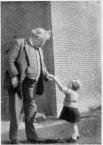
One of the personality traits I've admired in Chesterton (from what I've read) is his universal kindness. He was kind to Shaw as he was kind to the Nicholls girls; he was kind to Wells as he was kind to Belloc. Not that he agreed with them, but still he was kind to them.
It is very difficult to feel this kindness towards one's intellectual enemies. As an example, I have a personal blog. I stood up for something. An anonymous commenter disagrees with me and accuses me of doing something to which I am of the opinion he/she is wrong. My first inclination, as owner of the blog, is simply to wipe it away, delete the offending post.
(OK, so now you know I'm human. Forgive me, too, if I've offended anyone here: and I suspect I may have. I am a relatively new Chestertonian, and some of you have been around for more years than I've been alive. My inexperience sometimes shows. I humbly submit that I am not anywhere near perfect, learn something every day, and need forgiveness every day.)
But the Chestertonian thing to do with a disagreement is to try to be kind, and start a conversation where a conversation usually stops--at the disagreement. It is difficult not to let feelings (of which I tend to allow more reign than I should, I admit that) get the better of me.
But I am trying. I study Chesterton because I do hope to learn from him. And I hope that, given some years, I will become more kind. And if I learn that from Chesterton, our relationship will have been worth while.
Monday, April 10, 2006
Sometimes when I search the news for Chesterton, I find out some interesting things about the people in Chesterton, IN
Like this lady.
"While in Rome, Carson went shopping. The shops, she said, had nun dolls, but no pope dolls.
“Why no pope?” she asked."
Does the world need a pope doll? I wondered. But the thought came into my head about Chesterton's toy theater. Maybe a pope doll could play a role in a play, and it could really come in handy.
But I think the number of parents willing to shell out $225 for a child to play with are mighty few.
"While in Rome, Carson went shopping. The shops, she said, had nun dolls, but no pope dolls.
“Why no pope?” she asked."
Does the world need a pope doll? I wondered. But the thought came into my head about Chesterton's toy theater. Maybe a pope doll could play a role in a play, and it could really come in handy.
But I think the number of parents willing to shell out $225 for a child to play with are mighty few.
Saturday, April 08, 2006
Rochester Area Chestertonians
The Rochesterton NY Chesterton Society presents:
Shakespeare as Catholic
Saturday April 22, 2006
St. John Fisher College, Rochester, NY
9:00am-3:30pm
For more information: Rochesterton@hotmail.com
I heard a rumor that both Dale Ahlquist and Joseph Pearce will be there, plus a lucky e-friend who lives in the area. Maybe you can go, too, if you live that way.
I like that person's e-mail, a nice juxtaposition of "Rochester" and "Chesterton."
Shakespeare as Catholic
Saturday April 22, 2006
St. John Fisher College, Rochester, NY
9:00am-3:30pm
For more information: Rochesterton@hotmail.com
I heard a rumor that both Dale Ahlquist and Joseph Pearce will be there, plus a lucky e-friend who lives in the area. Maybe you can go, too, if you live that way.
I like that person's e-mail, a nice juxtaposition of "Rochester" and "Chesterton."
Friday, April 07, 2006
Obedience
"Obedience. The most thrilling word in the world; a very thunderclap of a word. Why do these fools fancy that the soul is only free when it disagrees with the common command? Even the mobs who rise to burn and destroy owe all their grandeur and terror, and a sort of authority, not to their anger but to their agreement. Why should mere disagreement make us feel free?"
The SurpriseCW 11:313
Obedience. A word you don't hear much nowadays, unless you are talking about dog training. Or trying to raise children. A lot of adults think they are "beyond" obedience, and, being progressive, are free to disagree with anything they like. The really hard thing is to obey. The really adventurous thing is to obey. The really wild and freeing thing to do is to obey.
But then we have to get philosophical and ask, "Obey what?" "Obey whom?"
The SurpriseCW 11:313
Obedience. A word you don't hear much nowadays, unless you are talking about dog training. Or trying to raise children. A lot of adults think they are "beyond" obedience, and, being progressive, are free to disagree with anything they like. The really hard thing is to obey. The really adventurous thing is to obey. The really wild and freeing thing to do is to obey.
But then we have to get philosophical and ask, "Obey what?" "Obey whom?"
Wednesday, April 05, 2006
Why did Chesterton Write Fiction?
Years ago, I gave up reading fiction. I wanted to concentrate on non-fiction, and I didn't have as much time, so it seemed like a good idea.
Then I discovered Chesterton, and at first, I got into the non-fiction, Orthodoxy and his other famous works. Then I discovered the Father Brown mysteries, which I broke my vow to read.
There are times, though, when I wonder why he took the time to write fiction. Is it because he just got a great idea in his head and couldn't do anything till he wrote it down? Was he hoping to teach people, or just entertain?
Then I discovered Chesterton, and at first, I got into the non-fiction, Orthodoxy and his other famous works. Then I discovered the Father Brown mysteries, which I broke my vow to read.
There are times, though, when I wonder why he took the time to write fiction. Is it because he just got a great idea in his head and couldn't do anything till he wrote it down? Was he hoping to teach people, or just entertain?
Tuesday, April 04, 2006
Item to Note in Gilbert
One of the more interesting items in the latest Gilbert is the drawing on the cover, an original Chesterton drawing for sale. If I had that kind of spare change (only about $3900--and it may be sold already, I'm not sure) I'd be the proud owner of a Chesterton relic...a...ahem!....piece of personal memorabilia. Did I mention the investment potential?
Monday, April 03, 2006
Chesterton and Topsy-Turveydom
What is it about our world that we need to look at upsidedown? Politics? Education? Families? Money? One of Chesterton's recurring themes is looking at things upsidedown, and seeing them rightly. I like the idea, but right now, my head is stuck looking at things straight on. Maybe I'm just tired, but I think we sometimes need help to see things differently, and that is one of the reasons I do like Chesterton.
Saturday, April 01, 2006
Editorial Seriousness
The main editorial in the latest Gilbert Magazine makes some interesting comments on the high courts of our nation, what they represent, what they impose on the people, and what they refuse to defend: namely, the defenseless.
There is one line I particularly liked:
"We the People can interfere with life but we must not interfere with death."
This line sums up the argument that when states step in to try to change laws in favor of life, often the high court will strike those laws down. But when states allow more death and destruction, the high court gives a silent nod of approval.
After reading a ton of Father Neuhaus over the last two weeks, I would have to say, though, that there is one line in this editorial that I disagree with, and think the Writers of the Editorial should also get a large dose of Fr. Neuhaus reading into their systems to correct this wrong perception.
I mean this:
"The majority," states the editorial in Gilbert, "the majority once believed that principles were fixed and that we should act accordingly."
Now I believe that this statement is only true if the editors meant by "majority" what they were speaking of earlier: the high courts and the government. But if, by majority, they meant the people, the common man as Chesterton would say, then I believe they are wrong. The majority still DO believe that principles are fixed, you just never hear about it on TV. The common man still lives and acts on principles and ideals that have held up to the test of time. You cannot use the veil of the media to determine what the common man really thinks and the foundations upon which he lives. (More on this Monday, lest this post run way down into the basement of this blog page.)
Reminder: Sunday is a down day for the ACS blog due to trying to keep it the Lord's Day. Kiss your kids, go to church, play a game with the family, take a walk, and say an extra prayer for all those here at ACS trying to make the world a better place, with the help of God's grace. We're praying for all of YOU.
There is one line I particularly liked:
"We the People can interfere with life but we must not interfere with death."
This line sums up the argument that when states step in to try to change laws in favor of life, often the high court will strike those laws down. But when states allow more death and destruction, the high court gives a silent nod of approval.
After reading a ton of Father Neuhaus over the last two weeks, I would have to say, though, that there is one line in this editorial that I disagree with, and think the Writers of the Editorial should also get a large dose of Fr. Neuhaus reading into their systems to correct this wrong perception.
I mean this:
"The majority," states the editorial in Gilbert, "the majority once believed that principles were fixed and that we should act accordingly."
Now I believe that this statement is only true if the editors meant by "majority" what they were speaking of earlier: the high courts and the government. But if, by majority, they meant the people, the common man as Chesterton would say, then I believe they are wrong. The majority still DO believe that principles are fixed, you just never hear about it on TV. The common man still lives and acts on principles and ideals that have held up to the test of time. You cannot use the veil of the media to determine what the common man really thinks and the foundations upon which he lives. (More on this Monday, lest this post run way down into the basement of this blog page.)
Reminder: Sunday is a down day for the ACS blog due to trying to keep it the Lord's Day. Kiss your kids, go to church, play a game with the family, take a walk, and say an extra prayer for all those here at ACS trying to make the world a better place, with the help of God's grace. We're praying for all of YOU.
Thursday, March 30, 2006
On To the Important Subject of Mushrooms
As Chesterton once said that every subject was worthy of notice. Or something like that. I noticed that Dave Beresford believes this, as well. His latest column ("The Flying Inn" --dangerously close to another columnist's title of "The Flying Stars" don't you think?) was all about mushrooms.
Now, my opinion on mushrooms is that: I never pick them, I never cook them, I will on occasion eat them (if served by a relative whose feelings might be hurt if I refuse), however, I cannot get this one sentence my husband once uttered out of my mind when I think about mushrooms.
What did he say, you ask?
"Why should I eat fungus?" he said.
It *IS* amazing that some fungus can, indeed, be eaten. And even more amazing is the process by which man discovered that some fungus could be eaten. There must be "mushroom martyrs" out there, people who have given their lives to the discovery of poisonous mushrooms, so that we, who live in the present, could not eat those, but the other ones that are not poisonous.
Dave's experience shows that if you do pick and eat mushrooms, you have to know what you are doing. Since it is not a goal in life of mine to become a mushroom expert, I leave that to others, and try as best I can to avoid fungus.
I think mushrooms deserve a poem, any takers? Maybe even a Clerihew?
Tuesday, March 28, 2006
A New Book from Our Mr. Ahlquist
Dale Ahlquist has been busy, it seems. A new book is coming soon. Keep alert!
Monday, March 27, 2006
And now, back to our magazine
The first article from the latest issue of Gilbert I want to discuss is the wonderful and inspirational story by Robert Moore-Jumonville in his highly unlikely column titled, Jogging with Chesterton. I think the essence of it is that Robert thinks Chestertonian thoughts as he jogs, not that he envisions Chesterton jogging with him.
Robert's article is about how he was able to join a soccer game (called football everywhere but in the US) in the Czech Republic, and then he recalls two other occassions in which this type of international conversation (or dance, as he metaphorically speaks of in his column) happened.
I really liked that image of people playing ball together, despite the inability to "communicate" on the speaking level.
It reminded me of a time I was in Germany and it started to snow these huge, gorgeous, Kodak-moment snowflakes. Everything was getting covered with a layer of white, and it was stunning. I happened to be walking along a path in a tiny little town called Garmisch alone, except for the hundreds of locals also walking (they walk a lot more there than we do here, I noticed). An older lady sort of caught up to me and smiled. I smiled back. She turned her head to the sky, where it was the kind of sky that looks like the start of a Star Wars movie, just white points falling from nowhere coming at you, and the whole thing means "infinity" when you look at it, and she said something in German, like "Dies ist schön, ya?" and I said "Ya" and I felt connected with all of mankind for just a second. (I don't speak much German, but knew schön meant beautiful.)
Music connects people, too. Dancing can be done without a translator. Art, when beautiful, needs no translation.
Did anyone read Robert's article and want to comment?
Robert's article is about how he was able to join a soccer game (called football everywhere but in the US) in the Czech Republic, and then he recalls two other occassions in which this type of international conversation (or dance, as he metaphorically speaks of in his column) happened.
I really liked that image of people playing ball together, despite the inability to "communicate" on the speaking level.
It reminded me of a time I was in Germany and it started to snow these huge, gorgeous, Kodak-moment snowflakes. Everything was getting covered with a layer of white, and it was stunning. I happened to be walking along a path in a tiny little town called Garmisch alone, except for the hundreds of locals also walking (they walk a lot more there than we do here, I noticed). An older lady sort of caught up to me and smiled. I smiled back. She turned her head to the sky, where it was the kind of sky that looks like the start of a Star Wars movie, just white points falling from nowhere coming at you, and the whole thing means "infinity" when you look at it, and she said something in German, like "Dies ist schön, ya?" and I said "Ya" and I felt connected with all of mankind for just a second. (I don't speak much German, but knew schön meant beautiful.)
Music connects people, too. Dancing can be done without a translator. Art, when beautiful, needs no translation.
Did anyone read Robert's article and want to comment?
Friday, March 24, 2006
Someone in Pakistan Likes G.K. Chesterton
I think this is so amazing, to find an essay of Chesterton's reprinted in a Pakistani newspaper. Link on title above.
Great exerpt:
The last few decades have been marked by a special cultivation of the romance of the future. We seem to have made up our minds to misunderstand what has happened; and we turn, with a sort of relief, to stating what will happen... which is (apparently) much easier. The modern man no longer presents the memoirs of his great grandfather; but is engaged in writing a detailed and authoritative biography of his great-grandson. Instead of trembling before the specters of the dead, we shudder abjectly under the shadow of the babe unborn. This spirit is apparent everywhere, even to the creation of a form of futurist romance. Sir Walter Scott stands at the dawn of the nineteenth century for the novel of the past; Mr HG Wells stands at the dawn of the twentieth century for the novel of the future. The old story, we know, was supposed to begin: “Late on a winter’s evening two horsemen might have been seen....” The new story has to begin: “Late on a winter’s evening two aviators will be seen....” The movement is not without its elements of charm; there is something spirited, if eccentric, in the sight of so many people fighting over again the fights that have not yet happened; of people still glowing with the memory of tomorrow morning. A man in advance of the age is a familiar phrase enough. An age in advance of the age is really rather odd.
People still glowing with the memory of tomorrow morning...I like that phrase. I've got to see if I can work it into some speech somewhere.
Great exerpt:
The last few decades have been marked by a special cultivation of the romance of the future. We seem to have made up our minds to misunderstand what has happened; and we turn, with a sort of relief, to stating what will happen... which is (apparently) much easier. The modern man no longer presents the memoirs of his great grandfather; but is engaged in writing a detailed and authoritative biography of his great-grandson. Instead of trembling before the specters of the dead, we shudder abjectly under the shadow of the babe unborn. This spirit is apparent everywhere, even to the creation of a form of futurist romance. Sir Walter Scott stands at the dawn of the nineteenth century for the novel of the past; Mr HG Wells stands at the dawn of the twentieth century for the novel of the future. The old story, we know, was supposed to begin: “Late on a winter’s evening two horsemen might have been seen....” The new story has to begin: “Late on a winter’s evening two aviators will be seen....” The movement is not without its elements of charm; there is something spirited, if eccentric, in the sight of so many people fighting over again the fights that have not yet happened; of people still glowing with the memory of tomorrow morning. A man in advance of the age is a familiar phrase enough. An age in advance of the age is really rather odd.
People still glowing with the memory of tomorrow morning...I like that phrase. I've got to see if I can work it into some speech somewhere.
Thursday, March 23, 2006
Rumors and Common Knowledge
Just to correct all of the information out there, it has come to my attention that Frances Blogg Chesterton had brown hair. Not red. Brown. As in Father Brown.
Thank you.
Evidence provided upon request.
Thank you.
Evidence provided upon request.
Wednesday, March 22, 2006
The Mysterious "Amber" Project
This post will explain all I know of "Amber." And I'm sure I don't know everything, so anyone who knows more, please post a comment.
AMBER is the name of a project that started years ago. It is the American Chesterton Society's attempt to get everything Chesterton wrote in electronic searchable format. There is a person in our group, a member of our society, so devoted to this work that he took two years of his life and spent them scanning and coding the works of Chesterton. They are now in an electronic format, but as of yet, unavailable to the public. I suppose all it would take is some monetary contributions, which can be made at the American Chesterton Society with the specification "AMBER Project" so your contribution can be directed to that work, if this is something you are interested in helping with.
Now many of the works of Chesterton's are on line. His work, for the most part, is in the public domain, and there are sources, such as Project Gutenberg, where many public domain works, including Chesterton's, can be found.
The beauty of AMBER is this: it is entirely searchable, and referencable (probably not a real word). What I mean is, that at Project Gutenberg, you may be able to search a single book, such as Orthodoxy, on a word that you are looking for quotes on, such as "Education" or "Catholic" or "Liberty", for example. Or, if you half remember a quote, you can search on the phrase you recall, such as "meaning of man" or whatever, and see if it is in that particular work.
With AMBER, you can search ALL the works of Chesterton for those same terms or phrases, and, once the quote is found, AMBER will give you the book and page number where it can be found.
In terms of references, and as a writer I can tell you this, this AMBER is invaluable for research and references. You would not have to go to the library, find a particular edition of a Chesterton book, and search through it to find out what page the particular quote is actually on. AMBER would help you with that.
I have used the AMBER service, by e-mailing the ACS (or using the "Quotemeister" service at hte ACS web page) and it is truly and really helpful.
I would love to see this project made public. This would involve (and those who know, help me out here) either a) making the information available in some sort of format such as CD-rom or DVD (however, I believe the sheer volume of information makes this impractical, as it would take MANY Cd's or many DVD's) or b) putting it all on-line, which I would believe would take money to 1. purchase a domain name 2. have a server that could store that much information and 3. pay someone to maintain the whole thing.
And the name AMBER, as Anon posted in the comments of the previous post, comes from the Greek name for electricity. I used to think it was some sort of mysterious acronym such as "Associated Manuscripts By Educated Rebels" or something meaningful like that. But it doesn't.
Any more questions about AMBER?
AMBER is the name of a project that started years ago. It is the American Chesterton Society's attempt to get everything Chesterton wrote in electronic searchable format. There is a person in our group, a member of our society, so devoted to this work that he took two years of his life and spent them scanning and coding the works of Chesterton. They are now in an electronic format, but as of yet, unavailable to the public. I suppose all it would take is some monetary contributions, which can be made at the American Chesterton Society with the specification "AMBER Project" so your contribution can be directed to that work, if this is something you are interested in helping with.
Now many of the works of Chesterton's are on line. His work, for the most part, is in the public domain, and there are sources, such as Project Gutenberg, where many public domain works, including Chesterton's, can be found.
The beauty of AMBER is this: it is entirely searchable, and referencable (probably not a real word). What I mean is, that at Project Gutenberg, you may be able to search a single book, such as Orthodoxy, on a word that you are looking for quotes on, such as "Education" or "Catholic" or "Liberty", for example. Or, if you half remember a quote, you can search on the phrase you recall, such as "meaning of man" or whatever, and see if it is in that particular work.
With AMBER, you can search ALL the works of Chesterton for those same terms or phrases, and, once the quote is found, AMBER will give you the book and page number where it can be found.
In terms of references, and as a writer I can tell you this, this AMBER is invaluable for research and references. You would not have to go to the library, find a particular edition of a Chesterton book, and search through it to find out what page the particular quote is actually on. AMBER would help you with that.
I have used the AMBER service, by e-mailing the ACS (or using the "Quotemeister" service at hte ACS web page) and it is truly and really helpful.
I would love to see this project made public. This would involve (and those who know, help me out here) either a) making the information available in some sort of format such as CD-rom or DVD (however, I believe the sheer volume of information makes this impractical, as it would take MANY Cd's or many DVD's) or b) putting it all on-line, which I would believe would take money to 1. purchase a domain name 2. have a server that could store that much information and 3. pay someone to maintain the whole thing.
And the name AMBER, as Anon posted in the comments of the previous post, comes from the Greek name for electricity. I used to think it was some sort of mysterious acronym such as "Associated Manuscripts By Educated Rebels" or something meaningful like that. But it doesn't.
Any more questions about AMBER?
Thursday, March 16, 2006
The Need for Confession
Hat tip: Tom
Well, if people can't go to the real thing, they sometimes try to make things up. Which is what these people (link above) are doing with confession. I always find is amusing when people say they'd be too embarrassed to confess to a priest, but the same people would have no trouble sending their deepest, darkest secrets to an anonymous blogger.
I'm not sure how Chesterton ties in with this, but I'll just say this: he converted.
Well, if people can't go to the real thing, they sometimes try to make things up. Which is what these people (link above) are doing with confession. I always find is amusing when people say they'd be too embarrassed to confess to a priest, but the same people would have no trouble sending their deepest, darkest secrets to an anonymous blogger.
I'm not sure how Chesterton ties in with this, but I'll just say this: he converted.
Wednesday, March 15, 2006
Politicians
A Chestertonian I know (I won't mention any names) has this quote at the end of his e-mails about how sad it is how few politicians are hanged. It's a GKC quote.
What is it about our political system that brings out the worst in people?
We have primary elections going on next Tuesday, so of course our community is in the last throes of campaigning, and it's getting ugly.
It is so ugly, we have two pro-life Republicans fighting over which is really more pro-life.
But then after they had that argument, it degraded into mud-slinging.
Some people seem to enter into politics for the good and noble reasons of helping mankind.
And then they seem to gradually become degraded by the PACs and lobbyists around them. Some don't, but so many do. I think it's the money which corrupts them. Maybe it would corrupt me, too, if I were in that situation. I like money as much as the next person, and maybe I'd be persuaded to vote a certain way if only my family were financially secure for life. Money is a big temptation. Perhaps the biggest. After all, even Jesus says something about God vs. money.
The politican I'd like to vote for is the one who seems stronger than I to resist the call of the temptation of money. I'd like to vote for the person who would always try to do what is right, good, noble, true and most helpful to mankind.
Let me know if you find that politician.
What is it about our political system that brings out the worst in people?
We have primary elections going on next Tuesday, so of course our community is in the last throes of campaigning, and it's getting ugly.
It is so ugly, we have two pro-life Republicans fighting over which is really more pro-life.
But then after they had that argument, it degraded into mud-slinging.
Some people seem to enter into politics for the good and noble reasons of helping mankind.
And then they seem to gradually become degraded by the PACs and lobbyists around them. Some don't, but so many do. I think it's the money which corrupts them. Maybe it would corrupt me, too, if I were in that situation. I like money as much as the next person, and maybe I'd be persuaded to vote a certain way if only my family were financially secure for life. Money is a big temptation. Perhaps the biggest. After all, even Jesus says something about God vs. money.
The politican I'd like to vote for is the one who seems stronger than I to resist the call of the temptation of money. I'd like to vote for the person who would always try to do what is right, good, noble, true and most helpful to mankind.
Let me know if you find that politician.
Sunday, March 12, 2006
Traveling with Gilbert
I'll be traveling the next few weeks, so blogging may be intermittent depending on the local internet service.
Meanwhile, be good and polite here as always.
I'll be taking a number of books with me, not all Chesterton's. Lord of the Rings, The Poet and the Lunatics, and a Collected Volume of Illustrated London News articles are coming. That doesn't necessarily mean I'll get a lot of reading done. I usually think I'm going to have a lot of free time traveling, and then somehow, I get caught up in...well....traveling!
Meanwhile, be good and polite here as always.
I'll be taking a number of books with me, not all Chesterton's. Lord of the Rings, The Poet and the Lunatics, and a Collected Volume of Illustrated London News articles are coming. That doesn't necessarily mean I'll get a lot of reading done. I usually think I'm going to have a lot of free time traveling, and then somehow, I get caught up in...well....traveling!
Friday, March 10, 2006

Read the play: Magic
A reader has sent me a wonderful resource for many of Chesterton's works on the internet, scanned copies of his books, but with the ability to be searchable.
The main page is here and if you put in Chesterton's name, you can see all kinds of things there. They operate in a new (for me) format called DjVu, however, I downloaded it (free) and it works quite nicely.
The main page is here and if you put in Chesterton's name, you can see all kinds of things there. They operate in a new (for me) format called DjVu, however, I downloaded it (free) and it works quite nicely.
Thursday, March 09, 2006
Things We Can't Do
I was reading an interview with Pope Benedict the other day, and the reporter was asking him why the church was always so negative, don't do this, don't do that. It was good because I know I get asked a lot of goofy questions about my faith, and it's nice to know I'm not the only one. :-)
Chesterton must have been asked this, too.
"A vast amount of nonsense is talked against negative and destructive things. The silliest sort of progressive complains of negative morality, and compares it unfavourably with positive morality. The silliest sort of conservative complains of destructive reform and compares it unfavourably with constructive reform. Both the progressive and the conservative entirely neglect to consider the very meaning of the words "yes" and "no". To give the answer "yes" to one question is to imply the answer "no" to another question; and to desire the construction of something is to desire the destruction of whatever prevents its construction. This is particularly plain in the fuss about "negative morality," or what may be described as the campaign against the Ten Commandments. The truth is, of course, that the curtness of the Commandments is an evidence, not of the gloom and narrowness of a religion, but, on the contrary, of its liberality and humanity. It is shorter to state the things forbidden than the things permitted; precisely because most things are permitted, and only a few things are forbidden. An optimist who insisted on a purely positive morality would have to begin (supposing he knew where to begin) by telling a man that he might pick dandelions on a common, and go on for months before he came to the fact that he might throw pebbles into the sea; and then resume his untiring efforts by issuing a general permission to sneeze, to make snowballs, to blow bubbles, to play marbles, to make toy aeroplanes, to travel on Tooting trams, and everything else he could think of, without ever coming to an end. In comparison with this positive morality, the Ten Commandments rather shine in that brevity which is the soul of wit. It is better to tell a man not to steal than to try to tell him the thousand things that he can enjoy without stealing; especially as he can generally be pretty well trusted to enjoy them.
[GKC, ILN Jan 3, 1920 CW32:17-18]
Chesterton must have been asked this, too.
"A vast amount of nonsense is talked against negative and destructive things. The silliest sort of progressive complains of negative morality, and compares it unfavourably with positive morality. The silliest sort of conservative complains of destructive reform and compares it unfavourably with constructive reform. Both the progressive and the conservative entirely neglect to consider the very meaning of the words "yes" and "no". To give the answer "yes" to one question is to imply the answer "no" to another question; and to desire the construction of something is to desire the destruction of whatever prevents its construction. This is particularly plain in the fuss about "negative morality," or what may be described as the campaign against the Ten Commandments. The truth is, of course, that the curtness of the Commandments is an evidence, not of the gloom and narrowness of a religion, but, on the contrary, of its liberality and humanity. It is shorter to state the things forbidden than the things permitted; precisely because most things are permitted, and only a few things are forbidden. An optimist who insisted on a purely positive morality would have to begin (supposing he knew where to begin) by telling a man that he might pick dandelions on a common, and go on for months before he came to the fact that he might throw pebbles into the sea; and then resume his untiring efforts by issuing a general permission to sneeze, to make snowballs, to blow bubbles, to play marbles, to make toy aeroplanes, to travel on Tooting trams, and everything else he could think of, without ever coming to an end. In comparison with this positive morality, the Ten Commandments rather shine in that brevity which is the soul of wit. It is better to tell a man not to steal than to try to tell him the thousand things that he can enjoy without stealing; especially as he can generally be pretty well trusted to enjoy them.
[GKC, ILN Jan 3, 1920 CW32:17-18]
Wednesday, March 08, 2006
Good News
The Jan/Feb issue of Gilbert is in the mail, so watch for it (we're getting closer and closer to being on time, yee-haw). Then when it arrives, we'll see what topics are most worthy of discussion here.
Meanwhile, in other good news, spring is moving north. If you are interested in following migrations an such, there is a great website called Journey North where you can follow robins, hummingbirds, bald eagles, whales and other such creatures as they make their spring journeys north.
Meanwhile, in other good news, spring is moving north. If you are interested in following migrations an such, there is a great website called Journey North where you can follow robins, hummingbirds, bald eagles, whales and other such creatures as they make their spring journeys north.
Tuesday, March 07, 2006
Frances (Blogg) Chesterton
What do we really know about her?
He loved her, that's for sure. She was five years older than him, that's interesting.
What tidbits do you have? I'm interested in knowing more about the woman Chesterton loved.
He loved her, that's for sure. She was five years older than him, that's interesting.
What tidbits do you have? I'm interested in knowing more about the woman Chesterton loved.
Monday, March 06, 2006
Smoking Cigars and Drinking Wine
It seems to me as if smoking cigars and drinking wine seem to go with Chesterton.
And I used to think (about the cigars, not the wine) that we *know* better than to smoke these days.
However, cigar smokers are such nice people, sensible people, such Chestertonian people, I had to think a bit. And I forgave them their cigars, especially since I knew it was not a regular habit, just an irregular habit.
Then, this past weekend, I was reading an old essay of Father Richard John Neuhaus's.
It's on-line here. And here is an excerpt:
"In his best-selling book, How We Die, Sherwin Nuland says we all die from the same cause: lack of oxygen to the brain. A thousand circumstances can contribute to that end, and innumerable, and often unknown, factors can contribute to each of those thousand circumstances. But the fact remains that-with or without cigarettes, alcohol, and drugs-the mortality rate is and will continue to be 100 percent. Understandably, people have a hard time accepting that. This is not a brief for adopting habits that are injurious to one's health and general well-being. There is a moral obligation to be a good steward of the physical self. But we should stop invoking statistics in a way that suggests we would naturally live forever unless "killed" by one bad habit or another."
Which I found interesting.
What is also interesting is that Father Neuhaus enjoys cigars and Dewar's (not wine, but in the same food group). He's obviously a Chestertonian.
And I used to think (about the cigars, not the wine) that we *know* better than to smoke these days.
However, cigar smokers are such nice people, sensible people, such Chestertonian people, I had to think a bit. And I forgave them their cigars, especially since I knew it was not a regular habit, just an irregular habit.
Then, this past weekend, I was reading an old essay of Father Richard John Neuhaus's.
It's on-line here. And here is an excerpt:
"In his best-selling book, How We Die, Sherwin Nuland says we all die from the same cause: lack of oxygen to the brain. A thousand circumstances can contribute to that end, and innumerable, and often unknown, factors can contribute to each of those thousand circumstances. But the fact remains that-with or without cigarettes, alcohol, and drugs-the mortality rate is and will continue to be 100 percent. Understandably, people have a hard time accepting that. This is not a brief for adopting habits that are injurious to one's health and general well-being. There is a moral obligation to be a good steward of the physical self. But we should stop invoking statistics in a way that suggests we would naturally live forever unless "killed" by one bad habit or another."
Which I found interesting.
What is also interesting is that Father Neuhaus enjoys cigars and Dewar's (not wine, but in the same food group). He's obviously a Chestertonian.
Friday, March 03, 2006
Post Modern Genius
I was just reading an article in Touchstone Magazine (it's an old issue, with my memory, the articles are all new again! October, 2005) in which the author (David Mills) writes a brilliant explanation of the Post Modern Mind. Here's part:
"If you talk to the Everyday Postmodernist long enough, you will feel as if you are speaking to two people inhabiting the same body. But, and this is the crucial point for our purposes, you cannot get him to recognize the contradiction, must less defend it. He hops from certainty to relativism and back. His philosophy requires no more of him, and justifies him in doing no more.
"The genius of this sort of idea is that it protects its devotees from rational challenge. They cannot easily be corrected, and worse, feel this to be a virtue, especially open-mindedness and tolerance. But it is a dangerous point of view, one of those false philosophies likely to increase misery and vice, and it is, unless I miss my guess, the way most of our friends, neighbors, and co-workers think."
I think Mr. Mills is a Chestertonian.
And I think he's right.
This is WHY I am a Chestertonian (at least at a Chestertonian discussion, everyone will agree to use REASON as a basis for argument) and why my family and friends are, for the most part, yet unconverted. The Everyday Postmodernist sounds so wise and accepting, so tolerant and non-judgemental, doesn't he?
"If you talk to the Everyday Postmodernist long enough, you will feel as if you are speaking to two people inhabiting the same body. But, and this is the crucial point for our purposes, you cannot get him to recognize the contradiction, must less defend it. He hops from certainty to relativism and back. His philosophy requires no more of him, and justifies him in doing no more.
"The genius of this sort of idea is that it protects its devotees from rational challenge. They cannot easily be corrected, and worse, feel this to be a virtue, especially open-mindedness and tolerance. But it is a dangerous point of view, one of those false philosophies likely to increase misery and vice, and it is, unless I miss my guess, the way most of our friends, neighbors, and co-workers think."
I think Mr. Mills is a Chestertonian.
And I think he's right.
This is WHY I am a Chestertonian (at least at a Chestertonian discussion, everyone will agree to use REASON as a basis for argument) and why my family and friends are, for the most part, yet unconverted. The Everyday Postmodernist sounds so wise and accepting, so tolerant and non-judgemental, doesn't he?
Thursday, March 02, 2006
Common Sense
The Dems want to revisit Katrina and make sure everyone knows what a bad job everyone (who is not a Dem) did during the emergency.
The tone of their sqawking leaves me questioning the honesty of their re-evaluation efforts.
What I find problematic about this is that for one, is was a hurricaine, right? This is categorized as an emergency. An unusual occurrance. A storm vastly worse than most storms. How can anyone be prepared, really, for that?
I want every Dem who is ready to condemn the government's actions who did not go to New Orleans to feed the poor or find shelter for the homeless to step forward. The Dem who has perfectly handled every emergency situation ever in his life can be the first to cast a stone.
The tone of their sqawking leaves me questioning the honesty of their re-evaluation efforts.
What I find problematic about this is that for one, is was a hurricaine, right? This is categorized as an emergency. An unusual occurrance. A storm vastly worse than most storms. How can anyone be prepared, really, for that?
I want every Dem who is ready to condemn the government's actions who did not go to New Orleans to feed the poor or find shelter for the homeless to step forward. The Dem who has perfectly handled every emergency situation ever in his life can be the first to cast a stone.
Wednesday, March 01, 2006
What is Reason?
Father Brown and Flambeau have this discussion in The Blue Cross about reason, and Father Brown says, "Reason is always reasonable." Flambeau argues that perhaps somewhere out in the infinite universe, perhaps there is a place where reason isn't reasonable.
This is where Father Brown knows that Flambeau isn't a priest, because he states this belief.
Nowadays, I am not so sure you could make that kind of judgement about a priest not being a priest because of his understanding of the word "reason."
Anyway, this led me to wonder, what is reason?
This is where Father Brown knows that Flambeau isn't a priest, because he states this belief.
Nowadays, I am not so sure you could make that kind of judgement about a priest not being a priest because of his understanding of the word "reason."
Anyway, this led me to wonder, what is reason?
Subscribe to:
Comments (Atom)


 Posts
Posts