I just finished listening to an audio book of The Man Who Was Thursday, found on iTunes, recorded by Zachary Brewster-Geisz (Thanks for doing that Zach! Great voices!) for Librivox on my iPod.
There are 15 chapters to this book, and I would listen to a few chapters every day for about a week, as I did other work.
This recording is very good, the guy recording it has a nice voice, he does a good variety of other voices (and keeps them straight as far as consistently doing the gravely voice for Dr. Bull, the cockney voice, etc.) so it was entertaining as well as interesting to listen to the whole thing on audio.
If you have an iPod and want something different to listen to, I recommend this one.
Go to Project Gutenberg, scroll down to the iTunes recordings.
Monday, August 31, 2009


Friday, August 28, 2009
Innocent Smith News
This just in:
Ellen Finan, of the Warren, Ohio, Chesterton Society, has discovered something interesting about some Dominicans who have completed their novitiate in Cincinnati, Ohio:
At the August 15th Mass of Simple Profession celebrated at St. Gertrude's Church in Cincinnati, OH. During the Mass, Fr. Brian Mulcahy, O.P., the Vicar Provincial, received the vows of the nine brothers completing their novitiate. The nine brothers making their simple profession were: Br. Thomas More Garrett, O.P.; Br. John Devaney, O.P.; Br. Boniface Endorf, O.P.; Br. Joseph Fussner, O.P.; Br. Benedict Joseph Freeman, O.P.; Br. Sebastian White, O.P.; Br. Gabriel Torretta, O.P.; Br. Paul Marich, O.P.; and Br. Innocent Smith, O.P.
Ellen writes: “I'm glad to see Innocent Smith made it through his novitiate year.”
This news makes me want EWTN
From Dale:
Last season's "Ask Mr. Chesterton" was the best episode ever. But I suspect this new season's will be even better. And Standford is not to be missed.
The 5th Season of the Apostle of Common Sense premieres on Sunday, September 6, 8 pm CDT. (9 Eastern)I hope *you* have EWTN so you can catch these episodes. Have you noticed how these just keep getting better and better?
This season features episodes on Language, the Problem of Evil, America, Islam, War, Parenthood, Priesthood, Modernism, and more. There will be a special episode on the Toy Theatre that you will NOT want to miss, there will be a whole new batch of “Ask Mr. Chesterton” and look for multiple appearances by that ex-seminarian Stanford Nutting. The kickoff episode will be about something called Truth. And, as always, we’ll be pre-empted by the Pope on a regular basis.
Last season's "Ask Mr. Chesterton" was the best episode ever. But I suspect this new season's will be even better. And Standford is not to be missed.
Check it out-Catholic Moments #116
Catholic Moments, and host Lisa Hendey, a great podcast by the way, has allowed me to test the waters of podcasting by hosting a 3 minute "Chesterton Moment" on her show from time to time.
The first one is here (on a libsyn page, just like ours will be soon) and just go ahead and listen to the whole show. Our segment is towards the middle of the podcast.
The first one is here (on a libsyn page, just like ours will be soon) and just go ahead and listen to the whole show. Our segment is towards the middle of the podcast.
Thursday, August 27, 2009
Our New Adventure: GKC's What's Wrong With the World
Yes, it is Thursday and so, as promised (or threatened!) we begin a new adventure...
Welcome to the first installment of our study of What's Wrong With the World, the soon-to-be-100-year-old text by G. K. Chesterton!
Please be patient while our assistants check your backpacks and other hiking gear - be sure to have your sunglasses and other safety equipment as this is going to be a challenging expedition. I will be using the CW4 edition by Ignatius Press, available through the ACS; there is also a nice edition available from Dover. However, since this text is divided into about 45 rather small chapters, we may not really require page numbers - we'll have to see. It's a lot of very little, but very steep and strenuous hikes... be sure to have your compass, your plumb bob, your magnifying glass, some snacks, and (very important) your notebook and writing implement... Ready? Forüt!
The first item on our agenda is to consider the title. It may come as some surprise to you that "What's Wrong With the World" was not what GKC wanted to call this book... but perhaps I ought to let him explain, since he actually wrote a very interesting and hilarious explanation for us, which he called:
As I mentioned, there are some 45 little chapters, which are grouped under five major heads:
1. "The Homelessness of Man"
2. "Imperialism, or the Mistake About Man"
3. "Feminism, or the Mistake About Woman"
4. "Education, or the Mistake About the Child"
5. "The Home of Man"
There are also three short "notes" which conclude the text.
But what really is the thrust of the text? What IS wrong with the world?
One very speculative view (submitted by a ridiculous computer scientist who likes to read GKC) is that WWWTW is a kind of extended commentary on something from GKC's earlier book, Orthodoxy. Now, you are all geared up for a new adventure, and no doubt do not wish to review the hikes of yesteryear... but I think it's the same mountains we are facing: "Most probably we are in Eden still. It is only our eyes that have changed." [GKC The Defendant, 3] And I mention Eden for good reason, for that is the clue to what is wrong:
Welcome to the first installment of our study of What's Wrong With the World, the soon-to-be-100-year-old text by G. K. Chesterton!
Please be patient while our assistants check your backpacks and other hiking gear - be sure to have your sunglasses and other safety equipment as this is going to be a challenging expedition. I will be using the CW4 edition by Ignatius Press, available through the ACS; there is also a nice edition available from Dover. However, since this text is divided into about 45 rather small chapters, we may not really require page numbers - we'll have to see. It's a lot of very little, but very steep and strenuous hikes... be sure to have your compass, your plumb bob, your magnifying glass, some snacks, and (very important) your notebook and writing implement... Ready? Forüt!
The first item on our agenda is to consider the title. It may come as some surprise to you that "What's Wrong With the World" was not what GKC wanted to call this book... but perhaps I ought to let him explain, since he actually wrote a very interesting and hilarious explanation for us, which he called:
"What is Right With the World"As we shall see next week, when we examine the dedication, there was some other humour to be gotten from this title. But let us proceed a bit further, since the title is our schema, our outline, for the entire series of hikes we are embarking on.
The above excellent title is not of my own invention. It was suggested to me by the Editor of this paper, [T.P.'s Weekly] and I consented to fill up the bill, partly because of the pleasure I have always had from the paper itself, and partly because it gives me an opportunity of telling an egotistical story, a story which may enlighten the public about the general origin of such titles.
I have always heard of the brutality of publishers and how they crush and obscure the author; but my complaint has always been that they push him forward far too much. I will not say that, so far from making too little of the author, they make too much of him; that this phrase is capable of a dark financial interpretation which I do not intend. But I do say that the prominent personalities of the literary world are very largely the creations of their publishers, in so far as they are not solely the creations of their wives. Here is a small incident out of my own existence. I designed to write a sort of essay, divided into sections, on one particular point of political error. This fallacy, though small and scholastic at first sight, seemed to me to be the real mistake in most modern sociological works. It was, briefly, the idea that things that have been tried have been found wanting. It was my purpose to point out that in the entanglements of practice this is untrue; that an old expedient may easily be the best thing for a new situation; that its principle may be useful though its practice failed; that its practice may have failed because its principle was abandoned; and so on. Therefore, I claimed, we should look for the best method, the ideal, whether it is in the future or the past. I imagined this book as a drab-coloured, decorous little philosophical treatise, with no chapters, but the page occasionally broken by section-headings at the side. I proposed to call my analysis of a radical error "What is wrong", meaning where the mistake is in our logical calculation. But I had highly capable and sympathetic publishers, whose only weakness was that they thought my unhappy monologue much more important than I did. By some confusion of ecstasy (which entirely through my own fault I failed to check) the title was changed into the apocalyptic trumpet-blast "What's Wrong With the World". It was divided up into three short, fierce chapters, like proclamations in a French riot. Outside there was an enormous portrait of myself looking like a depressed hairdresser, and the whole publication had somehow got the violence and instancy of a bombshell. Let it be understood that I do not blame the publishers in the least for this. I could have stopped it if I had minded my own affairs, and it came out of their beautiful and ardent souls I merely mention it as an instance of the error about publishers. They are always represented as cold and scornful merchants, seeking to keep your writers in the background. Alas (as Wordsworth so finely says), alas! the enthusiasm of publishers has oftener left me mourning.
Upon the whole, I am rather inclined to approve of this method of the publisher or editor making up the title, while the author makes up the remarks about it. Any man with a large mind ought to be able to write about anything. Any really free man ought to be able to write to order. ...
[GKC T. P.'s Weekly, (Christmas) 1910 in The Apostle and the Wild Ducks, 161-2]
As I mentioned, there are some 45 little chapters, which are grouped under five major heads:
1. "The Homelessness of Man"
2. "Imperialism, or the Mistake About Man"
3. "Feminism, or the Mistake About Woman"
4. "Education, or the Mistake About the Child"
5. "The Home of Man"
There are also three short "notes" which conclude the text.
But what really is the thrust of the text? What IS wrong with the world?
One very speculative view (submitted by a ridiculous computer scientist who likes to read GKC) is that WWWTW is a kind of extended commentary on something from GKC's earlier book, Orthodoxy. Now, you are all geared up for a new adventure, and no doubt do not wish to review the hikes of yesteryear... but I think it's the same mountains we are facing: "Most probably we are in Eden still. It is only our eyes that have changed." [GKC The Defendant, 3] And I mention Eden for good reason, for that is the clue to what is wrong:
Christianity spoke again and said: "I have always maintained that men were naturally backsliders; that human virtue tended of its own nature to rust or to rot; I have always said that human beings as such go wrong, especially happy human beings, especially proud and prosperous human beings. This eternal revolution, this suspicion sustained through centuries, you (being a vague modern) call the doctrine of progress. If you were a philosopher you would call it, as I do, the doctrine of original sin. You may call it the cosmic advance as much as you like; I call it what it is - the Fall."Yes, as painful as it msut be for us, the short answer to what's wrong with the world is the FALL. (Yes, I am well aware that there is a famous "missing quote": some news editor who asked "What IS wrong with the world?" GKC is reputed to have written back "I am." It is not clear if this is hearsay or a not-yet-found item, but it does not seem to appear in AMBER.) Here we have a clear statement of GKC's sense of what is wrong - and it is consistent with his other writing:
Christianity is that the ordinary condition of man is not his sane or sensible condition; that the normal itself is an abnormality. That is the inmost philosophy of the Fall. In Sir Oliver Lodge's interesting new Catechism, the first two questions were: "What are you?" and "What, then, is the meaning of the Fall of Man?" I remember amusing myself by writing my own answers to the questions; but I soon found that they were very broken and agnostic answers. To the question, "What are you?" I could only answer, "God knows." And to the question, "What is meant by the Fall?" I could answer with complete sincerity, "That whatever I am, I am not myself." This is the prime paradox of our religion; something that we have never in any full sense known, is not only better than ourselves, but even more natural to us than ourselves.
[GKC Orthodoxy CW1:321, 363, emphasis added]
These men were conscious of the Fall, if they were conscious of nothing else; and the same is true of all heathen humanity. Those who have fallen may remember the fall, even when they forget the height. Some such tantalising blank or break in memory is at the back of all pagan sentiment. There is such a thing as the momentary power to remember that we forget.But it is also consistent with the writing of others, and to conclude our initial study today I shall give you three other links, both earlier and later than GKC's writing, to this very important matter:
[GKC The Everlasting Man CW2:226]
What shall be said to this heart-piercing, reason-bewildering fact? I can only answer, that either there is no Creator, or this living society of men is in a true sense discarded from His presence. Did I see a boy of good make and mind, with the tokens on him of a refined nature, cast upon the world without provision, unable to say whence he came, his birthplace or his family connections, I should conclude that there was some mystery connected with his history, and that he was one, of whom, from one cause or other, his parents were ashamed. Thus only should I be able to account for the contrast between the promise and condition of his being. And so I argue about the world; - if there be a God, since there is a God, the human race is implicated in some terrible aboriginal calamity. It is out of joint with the purposes of its Creator. This is a fact, a fact as true as the fact of its existence; and thus the doctrine of what is theologically called original sin becomes to me almost as certain as that the world exists, and as the existence of God.Lest you think this is going to be a "theological" treatise, I would say that it is theological only because Man is theological. Remember when Holbrook Jackson wrote:
[J. H. Newman, Apologia Pro Vita Sua Part VII]
It must be first of all recognized that the condition of things inherent in human affairs must be borne with, for it is impossible to reduce civil society to one dead level. Socialists may in that intent do their utmost, but all striving against nature is in vain. There naturally exist among mankind manifold differences of the most important kind; people differ in capacity, skill, health, strength; and unequal fortune is a necessary result of unequal condition. Such unequality is far from being disadvantageous either to individuals or to the community. Social and public life can only be maintained by means of various kinds of capacity for business and the playing of many parts; and each man, as a rule, chooses the part which suits his own peculiar domestic condition. As regards bodily labor, even had man never fallen from the state of innocence, he would not have remained wholly idle; but that which would then have been his free choice and his delight became afterwards compulsory, and the painful expiation for his disobedience. "Cursed be the earth in thy work; in thy labor thou shalt eat of it all the days of thy life."[Gen 3:17]
[Leo XIII Rerum Novarum 17]
As a champion of the study of the thought of Thomas Aquinas, Leo XIII had most articulate views on the support which man's fallen nature has to take from the supernatural in order to cope with the natural order. Those views are most timely parts of his Encyclical at a time when Catholic theological, philosophical, and socio-economic discourse is cavorting with sheer naturalism. A pivotal part of that naturalism is the denial of original sin. Within the perspective of that denial (mostly by silence although at times vocal) any reference to original sin should appear most unscholarly, if not plainly ridiculous. Not so to Leo XIII. He devoted a full paragraph to the consequences of the Fall of which hard bodily labor was one... [here SLJ quotes RN 17, see above]
[S. L. Jaki "Beyond the Tools of Production" in The Gist of Catholicism and Other Essays 240]
II. Theology and religion are not the same thing. When the churches are controlled by the theologians religious people stay away.Chesterton replied, in green pencil,
[HJ Platitudes in the Making 25]
Theology is simply that part of religion that requires brains.This book, What's Wrong With the World, is about Man, about the World, and about Man's rightful place in the World - which is how we can learn what is wrong. Why? Because when asked "what are you?" we must reply "God knows." And when asked, "What is the meaning of the Fall?" we must reply, "that whatever I am, I am not myself." And because we'll need to understand something about what's wrong in order to know what's right, and what to do in order to repair what is wrong.
[GKC Platitudes Undone 25]
Wednesday, August 26, 2009
Mission Accomplished!
OK, ok, you can stop donating now! Just kidding. Anything extra we get goes towards other great work like the EWTN shows, the website, the research, etc.
THANK YOU. You all humble me. Yes, we have enough to podcast. Thank you so much everyone.
I probably can't thank you enough, but please know that I do pray for all our blog readers. Your support is a wondrous thing.
THANK YOU. You all humble me. Yes, we have enough to podcast. Thank you so much everyone.
I probably can't thank you enough, but please know that I do pray for all our blog readers. Your support is a wondrous thing.
Exciting Podcast news--
I'm thankful to God for helping me by sending wonderful people my way. YOU guys are fantastic for supporting podcasting. Thanks to those who have already donated. As far as I know, we are still $23.50 or so short, unless you've donated and not emailed me, then I don't know about it. If you can, please do.
However, very soon, quite soon, you are going to hear some very exciting podcasting news. I'll keep you posted, but meanwhile, pray for me to do a good job with this, and I'm praying for ALL OF YOU who read this blog. Thanks for being here.
And if you aren't subscribed to Catholic Moments with Lisa Hendey, you should be. That's a hint.
However, very soon, quite soon, you are going to hear some very exciting podcasting news. I'll keep you posted, but meanwhile, pray for me to do a good job with this, and I'm praying for ALL OF YOU who read this blog. Thanks for being here.
And if you aren't subscribed to Catholic Moments with Lisa Hendey, you should be. That's a hint.
Tuesday, August 25, 2009
Voice (audio) Feedback
In preparation for the podcast, I've set up a phone line dedicated to accepting voice feedback. This service (which is free) sends me a .wav file of the audio, which I can incorporate into my podcasts.
But, just to try it out, you could call and leave me a voice feedback now. The phone number is 1-206-337-9049. For anyone outside of Seattle (where the service is based) it will be a long distance and charges will apply.
Maybe you could call and say: "Hi, this is [your first name] and I LOVE G.K.Chesterton"
or
"Hi, my name is [your first name] and I regularly read the blog of the American Chesterton Society."
or
"Hello, my name is [your name here] and I love Chesterton because..."
or
"Hi! I'm [your name] and my favorite Chesterton book is XYZ because of ABC..."
I think you get the picture. Try it out! Anything recorded there, unless you say so, could be used in a future podcast.
But, just to try it out, you could call and leave me a voice feedback now. The phone number is 1-206-337-9049. For anyone outside of Seattle (where the service is based) it will be a long distance and charges will apply.
Maybe you could call and say: "Hi, this is [your first name] and I LOVE G.K.Chesterton"
or
"Hi, my name is [your first name] and I regularly read the blog of the American Chesterton Society."
or
"Hello, my name is [your name here] and I love Chesterton because..."
or
"Hi! I'm [your name] and my favorite Chesterton book is XYZ because of ABC..."
I think you get the picture. Try it out! Anything recorded there, unless you say so, could be used in a future podcast.
Monday, August 24, 2009
Fundraiser update
As far as I know, we have now raised $125.50. We still need $23.50. Any donation welcome. The 50 cents is from a very young person, which warms my heart!
A New Year at the Chesterton Academy
This just in from Dale:
This morning we began classes for Chesterton Academy’s second year. 20 students, grades 9, 10, and 11. (doubling our enrollment from last year) My wife will be teaching Spanish and Drama, my son Philosophy and History, and some math classes are being taught by Jim Carrico, who founded the Nevada Chesterton Society.
In addition to asking God’s blessings on the coming year, say a prayer of thanksgiving that this miracle is taking place right before our eyes.
Podcast Fund Raiser
Hi Everyone,
I hate to do this, but I need $149.
The American Chesterton Society is going to start podcasting soon, and I've got a great lineup of shows with talk, laughter, interviews with interesting people, clips of Chesterton's own voice, Chesterton, Chesterton, and more Chesterton.
You know this blog is free to run. No monthly fees, nothing. My time, yes, but no fees for storage or etc. Now it may load slowly for some of you, a complaint I've heard, but it's free, so we put up with it. So far. I have plans for someday getting something better, but for now, we're here.
Anyway, with podcasting, it's different. You have to have storage space on line so people can access the podcast anytime. And they take up space because they are audio files, which are bigger than just words. Even though they are just words. And some music, too.
The plan I need is at libsyn.com, and is $144/year, $12/month. The extra $5 is a one time fee to have a domain name so I can put up a link here, for example, or on FaceBook or Twitter, and people can go right there and download the new show.
If you think this is a worthwhile cause, and the American Chesterton Society is worthy of your hard-earned $$, please consider going here and making a donation and please, PLEASE specify "PODCAST" for your donation.
I haven't done a "Shea" to you before (he does quarterly fundraisers), but for this, I need to. Young people and commuters and people who exercise or whoever listens to podcasts may find ours (Uncommon Sense) and good things will follow. You know what I mean.
This donation is tax deductible.
Thank you!
I hate to do this, but I need $149.
The American Chesterton Society is going to start podcasting soon, and I've got a great lineup of shows with talk, laughter, interviews with interesting people, clips of Chesterton's own voice, Chesterton, Chesterton, and more Chesterton.
You know this blog is free to run. No monthly fees, nothing. My time, yes, but no fees for storage or etc. Now it may load slowly for some of you, a complaint I've heard, but it's free, so we put up with it. So far. I have plans for someday getting something better, but for now, we're here.
Anyway, with podcasting, it's different. You have to have storage space on line so people can access the podcast anytime. And they take up space because they are audio files, which are bigger than just words. Even though they are just words. And some music, too.
The plan I need is at libsyn.com, and is $144/year, $12/month. The extra $5 is a one time fee to have a domain name so I can put up a link here, for example, or on FaceBook or Twitter, and people can go right there and download the new show.
If you think this is a worthwhile cause, and the American Chesterton Society is worthy of your hard-earned $$, please consider going here and making a donation and please, PLEASE specify "PODCAST" for your donation.
I haven't done a "Shea" to you before (he does quarterly fundraisers), but for this, I need to. Young people and commuters and people who exercise or whoever listens to podcasts may find ours (Uncommon Sense) and good things will follow. You know what I mean.
This donation is tax deductible.
Thank you!
Sunday, August 23, 2009
Why I want to see Edinburgh - and something more
I saw something about GKC and Edinburgh recently - was it here ? I cannot recall. Anyway, I remembered that he has a fantastic description of the place, which has made me mark that city as a stopping-point for me if I ever get to the eastern side of the Atlantic. Here's just a little taste:
Since Nancy herself voted for "A" in my poll, I take that as approval for my getting into some hot water - that is, for our study of What's Wrong With the World (hereinafter WWWTW) to commence on the coming Thursdays, as God may permit me to proceed.
So! If you do not have a copy of WWWTW, you might wish to obtain CW4 from the ACS, which also contains the important books called Eugenics and Other Evils and The Superstition of Divorce and the pamphlets called Divorce Versus Democracy and Social Reform Versus Birth Control. As I proceed I shall use the pagination in CW4, but I hope to cover its roughly 44 "chapters" by doing one each week, so it ought to be easy for you to keep up regardless of what edition you have. I am well aware that there are some very controversial parts to the text - some of them I may take up, others I may leave for you to discuss, in the comment-box, or in your own bloggs. But I will try to give at least a little bit larger of the view of this book, trying (as we did in our study of Orthodoxy) to see more of it as Chesterton did.
One final point I'd like to make. If you are so inclined to offer your own comments and produce your own discussions, on WWWTW or on any other Chestertonian matter, please remember that you are free to set up your own blogg... it was GKC himself who seemed to presage this marvel when he wrote:
it is sometimes difficult for a man to shake off the suggestion that each road is a bridge over the other roads, as if he were really rising by continual stages higher and higher through the air. He fancies he is on some open scaffolding of streets, scaling the sky. He almost imagines that, if he lifted a paving-stone, he might look down through the opening, and see the moon. This weird sense of the city as a sort of starry ladder has so often come upon me when climbing the Edinburgh ways in cloudy weather that I have been tempted to wonder whether any of the old men of the town were thinking of the experience when they chose the strange and splendid motto of the Scotch capital. Never, certainly, did a great city have a heraldic motto which was so atmospherically accurate. It might have been invented by a poet - I might almost say by a landscape painter. The motto of Edinburgh, as you may still see it, I think, carved over the old Castle gate is, "Sic Itur ad Astra": "This Way to the Stars."If you know Latin, you may recognize that this is from the ninth book of Virgil's Aeneid... it is a very powerful and tantalizing phrase. GKC uses it in a very important essay (how fast I forget them after I've read them!) which I think you ought to read for yourself. Here's the critical bit:
[GKC "The Way to the Stars" in Lunacy and Letters 76]
The materialism which idolatrised scientific machinery was followed by a natural, and on the whole healthy, reaction which cursed and condemned it. But, indeed, the mere denunciation of engineering or chemistry was as materialistic as the mere adoration of them. What matters is the motive and not the machine. The attempt to make science a sort of substitute for religion was simply ludicrous. A man said: "I can see no sense in anything; I hate the human race; I wish I was dead; but I am glad they have discovered the telephone: now I can ring up in the middle of the night and say something I don't value to somebody I don't like." This man was unintelligent. But it was even more unintelligent to blame the telephone because we had nothing to say in it that was worth saying. Similarly the hopes of physical research were silly hopes if they really meant that such a matter as aviation could make life worth living. Being stupid and wicked above the clouds is the same as being stupid and wicked under them: and there are clouds as well as stars in the very brain of man wherever he may go. If it is not the habit that makes the monk, still less is it the wings that make the angel. Yet the same innocent joy that is felt by a child in seeing "the wheels go round" may well be felt by an angel in seeing the worlds go round.I said in my title that there would be something more, and here it is.
It has been touchingly reported that the little brother of the lost airman talks perpetually of the great aerial feat; and no one who knows anything of children will even need to be told so. It is this clear and stainless pleasure in science, as in a toy as big as the world, that we need rather than any displeasure at it. We can all remember it in the time when we cheered a passing railway-train or first stared at crystals through a microscope. We ought still to be able to cheer the railway-train. We still know that the diamond is beautiful, if the diamond-broker isn't. It was said that the Devil need not have all the good tunes: nor need he even have all the bad smells. Chemistry was as holy as hagiology when we were in the nursery. And in this sense, very different from the current one, there is such a thing as Christian Science. But the disinfectant of science is con-science, or conscience. When the moral air has been purified, as it has been by this all-annihilating storm, we recover the natural gladness in the magic made by man. And in no symbol is this more apparent than in the great symbol of the battle in the air, of which this one life and death will be the central and the fruitful legend.
We have done right and the heavens have not fallen: rather, we have re-inherited the heavens of our fathers. We have passed the midnight of materialism when the heavens were only vacant. The sky is what it was of old: a window of all the world and the entrance to immortality. Sic itur ad astra.
[GKC ILN June 26 1915 CW30:234-5]
Since Nancy herself voted for "A" in my poll, I take that as approval for my getting into some hot water - that is, for our study of What's Wrong With the World (hereinafter WWWTW) to commence on the coming Thursdays, as God may permit me to proceed.
So! If you do not have a copy of WWWTW, you might wish to obtain CW4 from the ACS, which also contains the important books called Eugenics and Other Evils and The Superstition of Divorce and the pamphlets called Divorce Versus Democracy and Social Reform Versus Birth Control. As I proceed I shall use the pagination in CW4, but I hope to cover its roughly 44 "chapters" by doing one each week, so it ought to be easy for you to keep up regardless of what edition you have. I am well aware that there are some very controversial parts to the text - some of them I may take up, others I may leave for you to discuss, in the comment-box, or in your own bloggs. But I will try to give at least a little bit larger of the view of this book, trying (as we did in our study of Orthodoxy) to see more of it as Chesterton did.
One final point I'd like to make. If you are so inclined to offer your own comments and produce your own discussions, on WWWTW or on any other Chestertonian matter, please remember that you are free to set up your own blogg... it was GKC himself who seemed to presage this marvel when he wrote:
This paper exists to insist on the rights of man; on possessions that are of much more political importance than the principle of one man one vote. I am in favour of one man one house, one man one field; nay I have even advanced the paradox of one man one wife. But I am almost tempted to add the more ideal fancy of one man one magazine ... to say that every citizen ought to have a weekly paper of this sort to splash about in ... this kind of scrap book to keep him quiet.After all:
[GKC in GK's Weekly April 4, 1925, quoted in Ward, Gilbert Keith Chesterton 497]
I believe in getting into hot water. I think it keeps you clean.
[GKC ILN March 10 1906 CW27:142]
The moderator - er - instigator - intrudes...
As I am a bit in the role of moderator - or perhaps, to be fair, the instigator of this discussion I ought not get into it very deeply. But I will not intrude my OWN words much - my only role is to let GKC play at least a little larger of a part in the conversation, though I may have to help by way of some introductory grunts. For example:
The question of "What am I?" is not often understood - in fact is rarely understood, if ever by the individual, perhaps because few of us understand very much about philosophy, or science or any real study of what humanity is. People say they want to "discover themselves" - but this is an error. To put it simply, our being does not depend on our knowing about our being - but even more, my own desire, or my own guess, or my own interpretation of "me" (of what I "am") is almost never what I really am. This truth is sure to be a let-down to some, but then that's the nature of things... we're very good at misleading ourselves about our selves! Sure, we have a definite opinion about what we are, but that does not make us what we are. Yes, you can find this in vast detail in Aquinas and other philosophers, but it is easier to take a little-known book by GKC and find the simple answer there. In GKC's "green-pencil" annotations to .... er, hm. Let me start over, since this is not really easy to quote directly.
In the little collection of Holbrook Jackson's aphorisms called Platitudes In the Making you will find this:
Now, on the issue of GKC as a generalist.... Here you have given me an opportunity for a perfect demonstration of the scholastic distinguo.
Watch and see:
I distinguish "generalist" in two senses: (1) as a writer (2) in the unrestricted sense.
In sense (1) concedo - I concede the point. He wrote about just about every possible topic, wisely and insightfully, for "I would undertake to pick up any topic at random, from pork to pyrotechnics, and show that it illustrates the truth of the only true philosophy" [GKC The Thing CW3:189].
In sense (2) nego - I deny the point. Rather, he had such an intense "presence of mind" that he was utterly dependent on his wife for many of the common ordinaries of life. For example:
Oh my, Brian, and Davy, and BlogNerd, you are on the verge of great discoveries: this is one of the most important questions facing humanity: WHAT IS MAN? (and its correlate, WHAT IS WOMAN?) Or, to be a little more general: What is the meaning of our existence?
But then, you might note, that this was asked of God in the exquisite Psalm 8:
The question of "What am I?" is not often understood - in fact is rarely understood, if ever by the individual, perhaps because few of us understand very much about philosophy, or science or any real study of what humanity is. People say they want to "discover themselves" - but this is an error. To put it simply, our being does not depend on our knowing about our being - but even more, my own desire, or my own guess, or my own interpretation of "me" (of what I "am") is almost never what I really am. This truth is sure to be a let-down to some, but then that's the nature of things... we're very good at misleading ourselves about our selves! Sure, we have a definite opinion about what we are, but that does not make us what we are. Yes, you can find this in vast detail in Aquinas and other philosophers, but it is easier to take a little-known book by GKC and find the simple answer there. In GKC's "green-pencil" annotations to .... er, hm. Let me start over, since this is not really easy to quote directly.
In the little collection of Holbrook Jackson's aphorisms called Platitudes In the Making you will find this:
No opinion matters finally: except your own.But GKC took a green pencil and scribbled in his own copy this slight revision:
[Holbrook Jackson, Platitudes in the Making, 15]
"No opinion matters finally: except your own."Indeed!
said the man who thought he was a rabbit.
[GKC/HJ Platitudes Undone 15]
Now, on the issue of GKC as a generalist.... Here you have given me an opportunity for a perfect demonstration of the scholastic distinguo.
Watch and see:
I distinguish "generalist" in two senses: (1) as a writer (2) in the unrestricted sense.
In sense (1) concedo - I concede the point. He wrote about just about every possible topic, wisely and insightfully, for "I would undertake to pick up any topic at random, from pork to pyrotechnics, and show that it illustrates the truth of the only true philosophy" [GKC The Thing CW3:189].
In sense (2) nego - I deny the point. Rather, he had such an intense "presence of mind" that he was utterly dependent on his wife for many of the common ordinaries of life. For example:
[Mrs. Mills, a friend] was struck by the placidity with which Frances accepted her husband's oddities in daily life. Both in London and when they stayed with one another in the country, a regular feature of each morning was a blood-curdling yell from upstairs, unutterably startling the first time you heard it. "It sounded," said Mrs. Mills, "like a werewolf." Frances would say, without a smile or the slightest sign of surprise, "Oh, that's Gilbert, he wants his tie tied." One morning he was very late. Frances went up to look and came down saying (again with no faint trace of surprise or amusement), "Gilbert dropped one of his garters [he was wearing knickerbockers and golf stockings], he went down on the floor to look for it and found a book there, so he began to read it."Ahem! Very funny. Now, on to the most important matter... the question, "what is man?":
[Ward, Return To Chesterton 75]
Oh my, Brian, and Davy, and BlogNerd, you are on the verge of great discoveries: this is one of the most important questions facing humanity: WHAT IS MAN? (and its correlate, WHAT IS WOMAN?) Or, to be a little more general: What is the meaning of our existence?
But then, you might note, that this was asked of God in the exquisite Psalm 8:
O Lord, our Lord, how admirable is thy name in the whole earth! For thy magnificence is elevated above the heavens. Out of the mouth of infants and of sucklings thou hast perfected praise, because of thy enemies, that thou mayst destroy the enemy and the avenger. For I will behold thy heavens, the works of thy fingers: the moon and the stars which thou hast founded. What is man, that thou art mindful of him? or the son of man, that thou visitest him? Thou hast made him a little less than the angels, thou hast crowned him with glory and honour: And hast set him over the works of thy hands. Thou hast subjected all things under his feet, all sheep and oxen: moreover, the beasts also of the fields. The birds of the air, and the fishes of the sea, that pass through the paths of the sea. O Lord, our Lord, how admirable is thy name in the whole earth![emphasis added]It is only by our working together that we shall begin to learn - as GKC did:
To the question, "What are you?" I could only answer, "God knows."If this seems like a riddle, we are in a well-known path:
[GKC Orthodoxy CW1:363]
Every great literature has always been allegorical - allegorical of some view of the whole universe. The 'Iliad' is only great because all life is a battle, the 'Odyssey' because all life is a journey, the Book of Job because all life is a riddle.Now,I shall go off to instigate another riddle in some other corner of the e-cosmos...
[GKC The Defendant 47]
Friday, August 21, 2009
The Best Conversation Ever
Seeing what's going on below, and the fact that we have 78 comments (a record for us) and more than two people involved in the conversation led me to wonder: What's the Best Conversation Ever? This one is certainly our blog's best. For example, we have people asking intelligent questions, and a few old standard questions, and some sill questions, and then we also have some really intelligent, well-thought-out, given-lightly answers.
I've been really please to see that no one has steam coming out of their ears, no on seems to be reacting in haste, if offense seems possible, I've seen apologies. It's really hard to carry on this kind of conversation over a blog because you can't see when someone is laughing or grinning as they type, knowing in their own minds they are composing a joke. On the other end, it may look like a sneer or a put-down, so these things can often go awry.
But let's get back to the topic. In-person conversations are really best, when you can have them, and I was wondering if you can recall your Best Conversation Ever. What were the elements that made it so memorable? Was there laughter? Intelligent exchange? New insights? Conversion? Wine? Cigars? Cards or scrabble involved?
Some of my Best Conversations Ever have actually taken place at ChesterCons at meals. I recall serious exchange of ideas blended with wine, and with laughter, and give and take, and some shouting and an occasional pounding of canes or sword sticks. I've also had some great conversations right here on line.
Tell us about your Best Conversation Ever. Where was it? When? Whom? How? Why?
I've been really please to see that no one has steam coming out of their ears, no on seems to be reacting in haste, if offense seems possible, I've seen apologies. It's really hard to carry on this kind of conversation over a blog because you can't see when someone is laughing or grinning as they type, knowing in their own minds they are composing a joke. On the other end, it may look like a sneer or a put-down, so these things can often go awry.
But let's get back to the topic. In-person conversations are really best, when you can have them, and I was wondering if you can recall your Best Conversation Ever. What were the elements that made it so memorable? Was there laughter? Intelligent exchange? New insights? Conversion? Wine? Cigars? Cards or scrabble involved?
Some of my Best Conversations Ever have actually taken place at ChesterCons at meals. I recall serious exchange of ideas blended with wine, and with laughter, and give and take, and some shouting and an occasional pounding of canes or sword sticks. I've also had some great conversations right here on line.
Tell us about your Best Conversation Ever. Where was it? When? Whom? How? Why?
Thursday, August 20, 2009
Poll: study WWWTW for its upcoming centennial?
Here is the question for you:
2010 will mark the centennial of GKC's What's Wrong With the World. So:
(a) Do you want to explore it here, as we did Orthodoxy?
(b) Or would you prefer another book? Which one?
(c) Or would you prefer some other entertainment - if so what?
2010 will mark the centennial of GKC's What's Wrong With the World. So:
(a) Do you want to explore it here, as we did Orthodoxy?
(b) Or would you prefer another book? Which one?
(c) Or would you prefer some other entertainment - if so what?
Wow - 62 and counting!
In the 1352 days since the beginning of this blogg, in the 1411 postings, there has never been one which has elicited such a series of comments as the recent casual excerpt from GKC's What's Wrong with the World - yes, 62 comments and counting. (For reference, the next most commented posting was on big box stores back in February of 2006 which got 40 comments.)
I mention 62 as it is a notable number: not because it is one more than the standard number of keys on a pipe organ, but it was GKC's age when he died. Ahem. It is not the number, but the quality, the truly Chestertonian - and yes, scholastic - tone of argumentation - the courtesy, the care to distinguo (I distinguish) and the more important care to be humble and to be respectful - this is an amazing achievement.
There were several points I felt inclined to respond to, but I think it better to give some additional tools - that is, let Chesterton have more of a say. Certainly, it appears that we could have a very spirited study of WWWTW - if that is desired , but let us reserve comment for that in another posting. The topics of Woman (writ large as Fr. Jaki liked to put it) and of Man - and of Education - are very important ones for us, and deserve our careful study and our honest discussion.
But for today, the feast of St. Bernard (1090-1153), the great Doctor of Clairvaux, I shall merely give a few excerpts froj Chesterton to assist the discussion. One non-Chestertonian thing I must point out - the question of the "ideal university" was raised - I strongly urge you to read Newman's The Idea of a University - which deserves a blogg or two to itself. (Yes, I meant BLOGG, not posting. It is exceedingly rich and a very important and powerful book.) I say it is non-Chestertonian only because it was written before he was born - but it is most Chestertonian in its import - or perhaps I ought to say GKC is most Newmanian. Someday perhaps someone will give us a study of the link between them.
Now, let us just consider a handful of quotes to aid (or stimulate) the discussion:
I mention 62 as it is a notable number: not because it is one more than the standard number of keys on a pipe organ, but it was GKC's age when he died. Ahem. It is not the number, but the quality, the truly Chestertonian - and yes, scholastic - tone of argumentation - the courtesy, the care to distinguo (I distinguish) and the more important care to be humble and to be respectful - this is an amazing achievement.
There were several points I felt inclined to respond to, but I think it better to give some additional tools - that is, let Chesterton have more of a say. Certainly, it appears that we could have a very spirited study of WWWTW - if that is desired , but let us reserve comment for that in another posting. The topics of Woman (writ large as Fr. Jaki liked to put it) and of Man - and of Education - are very important ones for us, and deserve our careful study and our honest discussion.
But for today, the feast of St. Bernard (1090-1153), the great Doctor of Clairvaux, I shall merely give a few excerpts froj Chesterton to assist the discussion. One non-Chestertonian thing I must point out - the question of the "ideal university" was raised - I strongly urge you to read Newman's The Idea of a University - which deserves a blogg or two to itself. (Yes, I meant BLOGG, not posting. It is exceedingly rich and a very important and powerful book.) I say it is non-Chestertonian only because it was written before he was born - but it is most Chestertonian in its import - or perhaps I ought to say GKC is most Newmanian. Someday perhaps someone will give us a study of the link between them.
Now, let us just consider a handful of quotes to aid (or stimulate) the discussion:
It is obvious that this cool and careless quality which is essential to the collective affection of males involves disadvantages and dangers. It leads to spitting; it leads to coarse speech; it must lead to these things so long as it is honorable; comradeship must be in some degree ugly. The moment beauty is mentioned in male friendship, the nostrils are stopped with the smell of abominable things. Friendship must be physically dirty if it is to be morally clean. It must be in its shirt sleeves. The chaos of habits that always goes with males when left entirely to themselves has only one honorable cure; and that is the strict discipline of a monastery. Anyone who has seen our unhappy young idealists in East End Settlements losing their collars in the wash and living on tinned salmon will fully understand why it was decided by the wisdom of St. Bernard or St. Benedict, that if men were to live without women, they must not live without rules. Something of the same sort of artificial exactitude, of course, is obtained in an army; and an army also has to be in many ways monastic; only that it has celibacy without chastity. But these things do not apply to normal married men. These have a quite sufficient restraint on their instinctive anarchy in the savage common-sense of the other sex. There is only one very timid sort of man that is not afraid of women.
[GKC WWWTW CW4:96]
What exactly is liberty? First and foremost, surely, it is the power of a thing to be itself.
[GKC "The Yellow Bird" in The Poet and the Lunatics]
To return to the Cyclostyle. I like the Cyclostyle ink; it is so inky. I do not think there is anyone who takes quite such a fierce pleasure in things being themselves as I do. The startling wetness of water excites and intoxicates me: the fieriness of fire, the steeliness of steel, the unutterable muddiness of mud. It is just the same with people.... When we call a man "manly" or a woman "womanly" we touch the deepest philosophy.
[GKC letter to Frances Blogg July 8 1899 quoted in Ward, Gilbert Keith Chesterton 108-9]
It is not in any such spirit of facile and reckless reassurance that we should approach the really difficult problem of the delicate virtues and the deep dangers of our two historic seats of learning. A good son does not easily admit that his sick mother is dying; but neither does a good son cheerily assert that she is "all right." There are many good arguments for leaving the two historic Universities exactly as they are. There are many good arguments for smashing them or altering them entirely. But in either case the plain truth told by the Bishop of Birmingham remains. If these Universities were destroyed, they would not be destroyed as Universities. If they are preserved, they will not be preserved as Universities. They will be preserved strictly and literally as playgrounds; places valued for their hours of leisure more than for their hours of work. I do not say that this is unreasonable; as a matter of private temperament I find it attractive. It is not only possible to say a great deal in praise of play; it is really possible to say the highest things in praise of it. It might reasonably be maintained that the true object of all human life is play. Earth is a task garden; heaven is a playground. To be at last in such secure innocence that one can juggle with the universe and the stars, to be so good that one can treat everything as a joke - that may be, perhaps, the real end and final holiday of human souls. When we are really holy we may regard the Universe as a lark; so perhaps it is not essentially wrong to regard the University as a lark. But the plain and present fact is that our upper classes do regard the University as a lark, and do not regard it as a University.
[GKC ILN Aug 17 1907 CW27:532-3]
...the differences between a man and a woman are at the best so obstinate and exasperating that they practically cannot be got over unless there is an atmosphere of exaggerated tenderness and mutual interest. To put the matter in one metaphor, the sexes are two stubborn pieces of iron; if they are to be welded together, it must be while they are red-hot. Every woman has to find out that her husband is a selfish beast, because every man is a selfish beast by the standard of a woman. But let her find out the beast while they are both still in the story of "Beauty and the Beast". Every man has to find out that his wife is cross - that is to say, sensitive to the point of madness: for every woman is mad by the masculine standard. But let him find out that she is mad while her madness is more worth considering than anyone else's sanity.
This is not a digression. The whole value of the normal relations of man and woman lies in the fact that they first begin really to criticise each other when they first begin really to admire each other. And a good thing, too. I say, with a full sense of the responsibility of the statement, that it is better that the sexes should misunderstand each other until they marry. It is better that they should not have the knowledge until they have the reverence and the charity. We want no premature and puppyish "knowing all about girls". We do not want the highest mysteries of a Divine distinction to be understood before they are desired, and handled before they are understood. That which Mr. Shaw calls the Life Force, but for which Christianity has more philosophical terms, has created this early division of tastes and habits for that romantic purpose, which is also the most practical of all purposes. Those whom God has sundered, shall no man join.
[GKC "Two Stubborn Pieces of Iron" in The Common Man 142-3]
Wednesday, August 19, 2009
Chesterton in Romania
From Steve:
I have met the acquaintance of Mircea Platon a distributist scholar-journalist who hails from Romania. I think that in the interest of international networking he would be an excellent contact.
He has in correspondence written,
Dear Stephen, we are trying to build an alliance between "middle
America" and "deep Romania". In November we'll publish in Romania an
anthology of American, Italian, English, Romanian, and Australian
Distributist writers. Anti-corporate and anti-Communist all the way!
See also, http://workstation3.blogspot.com/2009/07/drama-architecture-art-and-grace-evelyn.html
http://www.frontporchrepublic.com/?p=5288
Steve
Tuesday, August 18, 2009
Monday, August 17, 2009
God's Philosophers
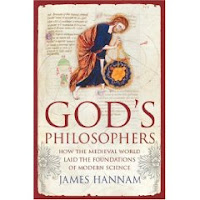
Announcing a very interesting and exciting new book: God's Philosophers: How the Medieval World Laid the Foundations of Modern Science by James Hannam, which is getting great reviews. I hope to read it very soon.
A Chesterton Center in Africa!
From our friend, Stratford Caldecott:
Dear Friends,
I wonder if I could ask you to give some publicity to this project among Chestertonians, by sending around a link to this web page?
www.secondspring.co.uk/economy/africaproject
Many thanks,
Stratford
Saturday, August 15, 2009
Quoting GKC Is Worth Doing Correctly
Herewith, the real source of one of GKC's most famous quotes. It seems that a number of people, both pro-Chestertonian and anti-Chestertonian, have no clue about it. At least this excerpt will give the context. Read it, enable your brain - then come to a conclusion, for "The human brain is a machine for coming to conclusions; if it cannot come to conclusions it is rusty. " [GKC Heretics CW1:196]
--Dr. Thursday
...I am often solemnly asked what I think of the new ideas about female education. But there are no new ideas about female education. There is not, there never has been, even the vestige of a new idea. All the educational reformers did was to ask what was being done to boys and then go and do it to girls; just as they asked what was being taught to young squires and then taught it to young chimney sweeps. What they call new ideas are very old ideas in the wrong place. Boys play football, why shouldn't girls play football; boys have school colors, why shouldn't girls have school-colors; boys go in hundreds to day-schools, why shouldn't girls go in hundreds to day-schools; boys go to Oxford, why shouldn't girls go to Oxford - in short, boys grow mustaches, why shouldn't girls grow mustaches - that is about their notion of a new idea. There is no brain-work in the thing at all; no root query of what sex is, of whether it alters this or that, and why, any more than there is any imaginative grip of the humor and heart of the populace in the popular education. There is nothing but plodding, elaborate, elephantine imitation. And just as in the case of elementary teaching, the cases are of a cold and reckless inappropriateness. Even a savage could see that bodily things, at least, which are good for a man are very likely to be bad for a woman. Yet there is no boy's game, however brutal, which these mild lunatics have not promoted among girls. To take a stronger case, they give girls very heavy home-work; never reflecting that all girls have home-work already in their homes. It is all a part of the same silly subjugation; there must be a hard stick-up collar round the neck of a woman, because it is already a nuisance round the neck of a man. Though a Saxon serf, if he wore that collar of cardboard, would ask for his collar of brass.
It will then be answered, not without a sneer, "And what would you prefer? Would you go back to the elegant early Victorian female, with ringlets and smelling-bottle, doing a little in watercolors, dabbling a little in Italian, playing a little on the harp, writing in vulgar albums and painting on senseless screens? Do you prefer that?" To which I answer, "Emphatically, yes." I Solidly prefer it to the new female education, for this reason, that I can see in it an intellectual design, while there is none in the other. I am by no means sure that even in point of practical fact that elegant female would not have been more than a match for most of the inelegant females. I fancy Jane Austen was stronger, sharper and shrewder than Charlotte Brontë; I am quite certain she was stronger, sharper and shrewder than George Eliot. She could do one thing neither of them could do: she could coolly and sensibly describe a man. I am not sure that the old great lady who could only smatter Italian was not more vigorous than the new great lady who can only stammer American; nor am I certain that the bygone duchesses who were scarcely successful when they painted Melrose Abbey, were so much more weak-minded than the modern duchesses who paint only their own faces, and are bad at that. But that is not the point. What was the theory, what was the idea, in their old, weak water-colors and their shaky Italian? The idea was the same which in a ruder rank expressed itself in home-made wines and hereditary recipes; and which still, in a thousand unexpected ways, can be found clinging to the women of the poor. It was the idea I urged in the second part of this book: that the world must keep one great amateur, lest we all become artists and perish. Somebody must renounce all specialist conquests, that she may conquer all the conquerors. That she may be a queen of life, she must not be a private soldier in it. I do not think the elegant female with her bad Italian was a perfect product, any more than I think the slum woman talking gin and funerals is a perfect product; alas! there are few perfect products. But they come from a comprehensible idea; and the new woman comes from nothing and nowhere. It is right to have an ideal, it is right to have the right ideal, and these two have the right ideal. The slum mother with her funerals is the degenerate daughter of Antigone, the obstinate priestess of the household gods. The lady talking bad Italian was the decayed tenth cousin of Portia, the great and golden Italian lady, the Renascence amateur of life, who could be a barrister because she could be anything. Sunken and neglected in the sea of modern monotony and imitation, the types hold tightly to their original truths. Antigone, ugly, dirty and often drunken, will still bury her father. The elegant female, vapid and fading away to nothing, still feels faintly the fundamental difference between herself and her husband: that he must be Something in the City, that she may be everything in the country.
There was a time when you and I and all of us were all very close to God; so that even now the color of a pebble (or a paint), the smell of a flower (or a firework), comes to our hearts with a kind of authority and certainty; as if they were fragments of a muddled message, or features of a forgotten face. To pour that fiery simplicity upon the whole of life is the only real aim of education; and closest to the child comes the woman -she understands. To say what she understands is beyond me; save only this, that it is not a solemnity. Rather it is a towering levity, an uproarious amateurishness of the universe, such as we felt when we were little, and would as soon sing as garden, as soon paint as run. To smatter the tongues of men and angels, to dabble in the dreadful sciences, to juggle with pillars and pyramids and toss up the planets like balls, this is that inner audacity and indifference which the human soul, like a conjurer catching oranges, must keep up forever. This is that insanely frivolous thing we call sanity. And the elegant female, drooping her ringlets over her water-colors, knew it and acted on it. She was juggling with frantic and flaming suns. She was maintaining the bold equilibrium of inferiorities which is the most mysterious of superiorities and perhaps the most unattainable. She was maintaining the prime truth of woman, the universal mother: that if a thing is worth doing, it is worth doing badly.
[GKC: the conclusion of chapter 14, "Folly and Female Education" of Part Four, "Education, or the Mistake About the Child" in What's Wrong With the World CW4:197-9, emphasis added]
Thursday, August 13, 2009
GKC on the Media
I am sorry but I have no time today to write. Instead, I offer a short excerpt for your consideration.
--Dr. Thursday
The B.B.C. has broadcast any number of speeches on any number of subjects, on which it is quite impossible for anyone to speak without expressing opinions that are widely controverted. But the case grows worse and worse every day, as more and more principles come in practice to be controverted. For the secular society of to-day is sceptical not merely about spiritual assumptions, but about its own secular assumptions. It has not merely broken the church window or besieged the tower of tradition; it has also kicked away the ladder of progress by which it had climbed. The Declaration of Independence, once the charter of democracy, begins by saying that certain things are self-evident. If we were to trace the history of the American mind from Thomas Jefferson to William James, we should find that fewer and fewer things were self-evident, until at last hardly anything is self-evident. So far from it being self-evident to the modern [sic] that men are created equal, it is not self-evident that men are created, or even that men are men. They are sometimes supposed to be monkeys muddling through a transition stage before the Superman.
But there is not only doubt about mystical things; not even only about moral things. There is most doubt of all about rational things. I do not mean that I feel these doubts, either rational or mystical; but I mean that a sufficient number of modern people feel them to make unanimity an absurd assumption. Reason was self-evident before Pragmatism. Mathematics were self-evident before Einstein. But this scepticism is throwing thousands into a condition of doubt, not about occult but about obvious things. We shall soon be in a world in which a man may be howled down for saying that two and two make four, in which furious party cries will be raised against anybody who says that cows have horns, in which people will persecute the heresy of calling a triangle a three-sided figure, and hang a man for maddening a mob with the news that grass is green.
[GKC ILN Aug 14 1926 CW34:144-5]
Wednesday, August 12, 2009
Views of the Ignatian Chapel on Seattle U's campus--the Outside


 As you can see, the architecture of this building is modern, very asymmetrical, plain, rather ugly walls, strange shapes, incongruous juxtapositions. A building least likely, upon viewing, to be suspected of being a chapel. Next you will see the inside.
Tuesday, August 11, 2009
ChesterTen
The ACS Conference in 2010 will be most likely in August, in the Washington DC area, most likely Maryland, Emmitsburg, probably Mount St. Mary's University. Nothing written in stone yet, but this is the anticipated time/place.
Hopefully, this will accomodate a lot of the east-coasters who couldn't come this year.
2011--in St. Louis.
Hopefully, this will accomodate a lot of the east-coasters who couldn't come this year.
2011--in St. Louis.
Monday, August 10, 2009
Scenes from The Banquet


 The Banquet, as usual, was an outstanding event, bringing together Chestertonians with wine, laughter, and song.
I did miss Mark Pilon and his dulcimer this year, but then we had Seattle Chesterton Society President Kirk Kanzelberger's talented daughter Sophia on violin, and then his son Leo on classical guitar. The Wise Men was recited by a variety of young people who had a variety of accented voices. Then Mark Shea's son Peter recited a poem I believe about socks which was a real tongue twister. Dale himself recited a poem by J.C. Squires as noted below by Geir in the comments box.
Then there were the traditional toasts, with a new one added. The usual toasts were three, 1. To Chesterton, (Dale gave) 2. To the American Chesterton Society, (Mark Shea gave) and 3. To Chestertonians everywhere (Geir Hasnes gave). This year was added a fourth, in honor of our new movable feast, to all Local Chesterton Societies. Kirk Kanzelberger was the giver of this toast, and he gave a very moving and inspiring summons to all of us as to what, really, a local group should be.
In particular, he said a local group should have three goals: 1. have fun, 2. learn about Chesterton, and 3. apply Chesterton to our lives. From what I observed of the Seattle group, they have accomplished these goals, and continue to do so.
Kirk, Andrew Tadie and Mark Shea were instrumental in planning the conference this year, to which I join everyone who attended in saying THANK YOU.
OK, the pictures. First, is a scene of people toasting during the traditional toast portion of the evening. Next, is Kirk at the mic, next, is Shea lifting his glass for the toast to the ACS, next is everyone in the crowd, and in particular, a pair of love birds in the foreground, and lastly, Dale.
Saturday, August 08, 2009
Conference T shirts
The conference T Shirts went quickly as anticipated. Those of you who already told me--I saved you one, don't worry.
Those of you still wanting one--we're trying to see how many of you there are, so we can decide if we should do a second run. If we reach critical mass, we'll make another order. So let me know in the combox or via email if you are interested.
Those of you still wanting one--we're trying to see how many of you there are, so we can decide if we should do a second run. If we reach critical mass, we'll make another order. So let me know in the combox or via email if you are interested.
The New Gilbert
The newest and hot off the pressest issue of Gilbert was showing its face at the conference. I only got a brief look at it, but it had something about jazz on the cover, and I noticed a huge number of letters to the Editor, at least FOUR of which were provoked by myself. Was I really that controversial? I don't know because I never got a chance to get back to the table and actually read those letters.
Here's hoping my copy is waiting for me back home. I hope yours has either arrived or will be soon.
Here's hoping my copy is waiting for me back home. I hope yours has either arrived or will be soon.
More pictures


 First is a long distance shot of Mark Shea giving his talk on Becoming Innocent. Next is David Deavel, almost PhD, giving his talk on Chesterton and Hitchcock. Then a cute shot of the Control Room Guys, Julian, Landon, and Gabriel Ahlquist, manning the sound booth. And finally,
Rod Bennett, who spoke on Chesterton and Frank Capra.
Mark Shea--On Becoming Innocent
This afternoon, Mark Shea, blogger extraordinaire, in fact, once could say, one of the original bloggers, a blogger who began as a bulletin board aficionado, author, actor, speaker and all around nice guy, is speaking on Becoming Innocent.
Yesterday, I had the pleasure of meeting Mark's wife Jan.
Mark started out by saying he would talk about what he learned about being Innocent Smith. He spoke about being on the film set, and said the actors aren't the interesting part of the film making. The crew are the interesting part. Joey Odendahl is the man. The one who wrote it and directed it. Odendahl had everything to do with the movie Manalive.
The first thing Shea wonders is how Innocent Smith could possibly stay so fat. He's turbo charged, Shea says, is a compilation of Mary Poppins, who blows in with the wind, and Bugs Bunny.
Innocent is child-like, and has complete trust in God. There is an element in Smith that is terrifying. How does he live? How can he rush around like that all the time?
Shea learned what Spencer Tracey says: Acting consists of the following things--remember your lines, and don't bump into the furniture.
He learned that film making is an intensely collaborative effort, and everyone makes it happen.
Mark has a theater background. In college, he was a theater major for a few years. But he thought it was a rather unstable profession, so he decided to change to a rock solid stable field, and became and English major.
Mark realized that his faith, being a convert to the Catholic Church, and his theater background came together. Because as Kevin O'Brien pointed out last night, theater and liturgy are related. The theater and the liturgy have many parallels, which was so interesting, and Shea spoke so fast I can't relate it all here and encourage you to please get the CDs so that you can hear it all. It was fascinating.
It is a 20th century phenomenon that those we idolize are dramatic actors and in particular, film actors. The theater is the new liturgy. Theater and liturgy prepare us to receive grace. Theater can't deliver grace, but it can prepare hearts to receive grace.
Mark closed with the poem of Chesterton's called The Convert. Maybe you want to look it up and read or re-read it.
Yesterday, I had the pleasure of meeting Mark's wife Jan.
Mark started out by saying he would talk about what he learned about being Innocent Smith. He spoke about being on the film set, and said the actors aren't the interesting part of the film making. The crew are the interesting part. Joey Odendahl is the man. The one who wrote it and directed it. Odendahl had everything to do with the movie Manalive.
The first thing Shea wonders is how Innocent Smith could possibly stay so fat. He's turbo charged, Shea says, is a compilation of Mary Poppins, who blows in with the wind, and Bugs Bunny.
Innocent is child-like, and has complete trust in God. There is an element in Smith that is terrifying. How does he live? How can he rush around like that all the time?
Shea learned what Spencer Tracey says: Acting consists of the following things--remember your lines, and don't bump into the furniture.
He learned that film making is an intensely collaborative effort, and everyone makes it happen.
Mark has a theater background. In college, he was a theater major for a few years. But he thought it was a rather unstable profession, so he decided to change to a rock solid stable field, and became and English major.
Mark realized that his faith, being a convert to the Catholic Church, and his theater background came together. Because as Kevin O'Brien pointed out last night, theater and liturgy are related. The theater and the liturgy have many parallels, which was so interesting, and Shea spoke so fast I can't relate it all here and encourage you to please get the CDs so that you can hear it all. It was fascinating.
It is a 20th century phenomenon that those we idolize are dramatic actors and in particular, film actors. The theater is the new liturgy. Theater and liturgy prepare us to receive grace. Theater can't deliver grace, but it can prepare hearts to receive grace.
Mark closed with the poem of Chesterton's called The Convert. Maybe you want to look it up and read or re-read it.
David Deavel--Chesterton and Alfred Hitchcock
 After posting all of David's helpful conference notes, I am now happy to report live on David's talk on Hitchcock.
Deavel first mentioned a series of commonalities between Chesterton and Hitchcock. The character parallels are interesting, and I suggest you purchase the CDs if you are interested in hearing a very interesting comparison.
The differences between the two artists was vast. Hitchcock was stingy, Chesterton generous. Hitchcock insecure about his looks, Chesterton couldn't care less about his appearance. Yes, they were both rotund, but Hitchcock wished he could have purchased a suit off the rack. Chesterton relied on Frances to dress him up and keep him from appearing messy.
Both were Catholic, but in completely different ways.
What did Hitchcock take from his Catholic history and put into his work? What influence did Chesterton have on Hitchcock? Hitchcock identified Chesterton as an early influence. He borrowed the title of his book in the Man Who Knew Too Much.
Hitchcock read Chesterton's Defense of Penny Dreadfuls, which Hitchcock considered important.
Chesterton was a member of a Picture Theater Group that met to discuss film, starting in 1919. Chesterton was in the film The Rosy Rapture in 1916 as a cowboy filmed by Peter Pan author J.M. Barrie.
Chesterton critiqued film, in much the same way he critiqued literature, defending film as cheap detective novels were defended. He wanted morals and consequences in film as much as in books.
Chesterton stated that films ruined good books, making them think they'd read the book. He said he also felt the same way about plays adapted from books.
Hitchcock films follow a Catholic pattern of guilt, confession, penance and redemption.
Hitchcock and Chesterton share an image during the penance phase of something hanging, usually a person, perilously from a precipice, a cliff, or a tower. Remember Michael in The Ball and the Cross, hanging from the top of the church.
It is known that Hitchcock read the Father Brown mysteries.
The guilt doesn't have to be personal, at times, the wrong man is identified as the criminal, as in his film The Wrong Man.
There is a wide divergence between Chesterton and Hitchcock when it comes to endings. Both use color and the chase. Hitchcock said the chase was 60% of the film in terms of importance. And Chesterton has great chase scenes, remember The Man Who Was Thursday, The Ball and the Cross and the Flying Inn.
Overall, a quite interesting talk, and worth listening to the CD.
Carl Hasler--David's take
Again, thanks to David:
Carl Hasler, long-time conference speaker and professor of philosophy at Collin College in Plano, Texas, reflected on the confusions in modern education, particularly the substitution of more and less thoughtful uses of technology for a competent philosophy of the human person and a notion of how to hand on that philosophy to children. Hasler showed, using great contemporary thinkers like J. Budziszewski, the limitations and the corruptions of a modern society that is relativistic about philosophy and morals, but dogmatic about politics and educational techniques: they know exactly what to do in minor areas, but not the larger picture that informs them. The question and answer period included many testimonies as to why Chesterton’s critiques of education in his day applied not only to education in our day, but to other areas like medicine.
Michael Perry--On Chesterton and War
Again, from David Deavel:
Michael W. Perry of Inkling Books was awarded the Outline of Sanity Award for editing and publishing his four books by or about Chesterton, particularly his recent collection, Chesterton and War. His talk enumerated the prophetic predictions and policy recommendations—many of them ignored—that Chesterton made. His prophecies included the rise of Hitler and a second world war while his policy recommendations had in them the outlines of the West’s Cold War strategy, not limited to something that looks curiously like NATO. Perry also spoke about Chesterton’s views on how society should react to false views like cosmopolitanism and pacifism. Chesterton defended freedom of speech without resorting to relativism. He wanted debate because he of his own optimism that truth will come out in the end and rigorous argument was the tool by which it would happen. Perry spiced these points with many of his own views about how Chesterton would react to movements that arose after his death, both political and cultural.Thanks, David.
Nathan Allen--on Chesterton and Ratzinger
This from correspondent David Deavel:
Deacon Nathan Allen took a stroll through the life and famous quotations of G. K. Chesterton, alternately referring to G. K. Chesterton and “our man.” Halfway through the talk he revealed his trick. When referring to “our man” he had not been referring to Chesterton but to Joseph Ratzinger, Pope Benedict XVI, thus revealing certain notable parallels in the life and writing of the two. Allen had been noticing Chestertonian lines in the writings of Ratzinger, the election of the latter to the papacy in 2005 led him to investigate whether Ratzinger had ever quoted Chesterton directly. What he found was that he hadn’t, but that his thought truly was Chestertonian in many respects, particularly the criticism of various forms of biblical “higher criticism,” relativism, and indeed in his sometimes paradoxical descriptions of the life and mission of the Son of Man. Allen concluded that though it was probably fruitless to speculate on what Chesterton would be like as a pope, it is a source of gratitude, and very fruitful, to read the two in tandem. He didn’t use the term, but Allen, who is editing an annotated version of The Four Men by the second half of that odd beast, the “Chesterbelloc,” might consider a book on what we might call the “Chesterzinger”!Thanks, David.
Rod Bennett--Chesterton and Frank Capra
Rod Bennett is speaking now on the connection between Chesterton and Frank Capra, and in particular, the movie It's a Wonderful Life.
George Bailey is the Manalive, says Bennett. He began by telling us some of his personal biography, the story of his seeing the movie as a fourteen year old. The movie was, it seems, a turning point in his life.
Bennett then gave us a brief biography of Frank Capra's life. He's been described as the cinematic Normal Rockwell. But his life wasn't all a road of ease. He valued education, and loved science, attending CalTech and becoming a bit of a scientist. He even considered becoming a priest. He has written an autobiography, which Bennett quoted from. Capra, during college, left his Catholic religious faith behind, and embraced science, and fell in love with a Presbyterian; although he still attended Mass on Christmas and Easter.
He was given the opportunity, as a scientist, to make a big amount of money as a still maker from the mob. But instead, he was connected with a scientist name Hubble, who got Frank to do some science work on some lights for a film, and thus, he entered the film world.
He quickly began to work in film, and married a woman who was a member of the Church of Christian Scientist. He never became a Christian Scientist. Now it was the early 30s, and he met a man named Miles Connolly (author of Mr. Blue). Capra described him as "violently Catholic". (This reminds us of Chesterton meeting Belloc, doesn't it?) Connolly actually knew of Chesterton and Belloc, and succeeded in getting them to write for his magazine. Connolly was also involved in the film business as a "script doctor". Connolly quoted Hilaire Belloc to Capra on their first meeting.
Connolly determined to bring Capra back into the fold, and he planned to do it with Chesterton and Belloc. Connolly began to goad Capra into using his great talent for a better purpose. Capra was making simple silly films, and Connolly told him is was wasting his talent. Capra described this period of a love/hate friendship time.
The best Connolly scholar, a priest in Boston, says that Connolly's book, Mr. Blue, was a direct response of Connolly's to his reading of Chesterton's biography of St. Francis of Assisi. Another scholar states that Mr. Blue was based on Chesterton himself.
The films Capra made after this period of time all are based on the temptation to faith. Capra continuously felt the pull between faith and science, and his films work out this skepticism. He begins the film with a family and a faith as a hypothesis. Then, he experiments with doubt, despair and tragedy, gets the situation to boil and burn, and find out whether the man will break or survive.
His characters then split into two characters, the idealist and the cynic. The idealist is the good guy, and the cynic is the bad guy. What will happen when their two world collide?
Mr. Deeds is the first film Capra made under the influence of Connolly. Mr. Deeds is based on Mr. Blue.
The reason the world invalidates Capra's films is that he resolves the doubt of the film. His characters doubt, wonder, think, work, and eventually resolve their issues. The modern world doesn't like this resolution, it wants to continue in its doubt.
After his retirement, Capra spent most of his money secretly on Catholic evangelization efforts.
At the end of his life, he made films for the Bell Telephone Company. Our Mr. Sun, Hemo the Magnificent, etc. Bennett says these films are wonderful.
Capra was also influenced by Eric Gill, and claimed he was a major influence in his life, and Gill was the man who designed Gilbert and Frances Chesterton's gravestone.
George Bailey is the Manalive, says Bennett. He began by telling us some of his personal biography, the story of his seeing the movie as a fourteen year old. The movie was, it seems, a turning point in his life.
Bennett then gave us a brief biography of Frank Capra's life. He's been described as the cinematic Normal Rockwell. But his life wasn't all a road of ease. He valued education, and loved science, attending CalTech and becoming a bit of a scientist. He even considered becoming a priest. He has written an autobiography, which Bennett quoted from. Capra, during college, left his Catholic religious faith behind, and embraced science, and fell in love with a Presbyterian; although he still attended Mass on Christmas and Easter.
He was given the opportunity, as a scientist, to make a big amount of money as a still maker from the mob. But instead, he was connected with a scientist name Hubble, who got Frank to do some science work on some lights for a film, and thus, he entered the film world.
He quickly began to work in film, and married a woman who was a member of the Church of Christian Scientist. He never became a Christian Scientist. Now it was the early 30s, and he met a man named Miles Connolly (author of Mr. Blue). Capra described him as "violently Catholic". (This reminds us of Chesterton meeting Belloc, doesn't it?) Connolly actually knew of Chesterton and Belloc, and succeeded in getting them to write for his magazine. Connolly was also involved in the film business as a "script doctor". Connolly quoted Hilaire Belloc to Capra on their first meeting.
Connolly determined to bring Capra back into the fold, and he planned to do it with Chesterton and Belloc. Connolly began to goad Capra into using his great talent for a better purpose. Capra was making simple silly films, and Connolly told him is was wasting his talent. Capra described this period of a love/hate friendship time.
The best Connolly scholar, a priest in Boston, says that Connolly's book, Mr. Blue, was a direct response of Connolly's to his reading of Chesterton's biography of St. Francis of Assisi. Another scholar states that Mr. Blue was based on Chesterton himself.
The films Capra made after this period of time all are based on the temptation to faith. Capra continuously felt the pull between faith and science, and his films work out this skepticism. He begins the film with a family and a faith as a hypothesis. Then, he experiments with doubt, despair and tragedy, gets the situation to boil and burn, and find out whether the man will break or survive.
His characters then split into two characters, the idealist and the cynic. The idealist is the good guy, and the cynic is the bad guy. What will happen when their two world collide?
Mr. Deeds is the first film Capra made under the influence of Connolly. Mr. Deeds is based on Mr. Blue.
The reason the world invalidates Capra's films is that he resolves the doubt of the film. His characters doubt, wonder, think, work, and eventually resolve their issues. The modern world doesn't like this resolution, it wants to continue in its doubt.
After his retirement, Capra spent most of his money secretly on Catholic evangelization efforts.
At the end of his life, he made films for the Bell Telephone Company. Our Mr. Sun, Hemo the Magnificent, etc. Bennett says these films are wonderful.
Capra was also influenced by Eric Gill, and claimed he was a major influence in his life, and Gill was the man who designed Gilbert and Frances Chesterton's gravestone.
Pictures from Last Night


 Here is the cast and crew of the movie The Honor of Israel Gow: Dale Ahlquist (Lord Glengyle), Eric Kaiser Johnson (the porter), Kevin O'Brien (Father Brown), Julian Ahlquist (Flambeau), Stephen Beaumont (the director) and Eric Genuis (musical score). And Eric Genuis is speaking about the importance of wonderful music for ourselves and our youth, Eric playing the piano, and
 Kevin O'Brien speaking on Chesterton and Drama.
Pictures from the common room


 Just a few pictures of the crowd in the lobby shopping for books and other Chesterton items.
Friday, August 07, 2009
The CDs
The Chesterton Conference is being taped, however, the tapes will not be available at the conference, as they sometimes have been in the past. As soon as they are ready, it will be on the ACS front page of the website.
Chestertoons
At dinner tonight, I was sitting with Mark Shea, David Deavel, Joey Odendahl, Adrian Ahlquist and having a great time.
Mark Shea, under the influence of the muses of the rest of us, came up with the name for next year's Conference. It will be called ChesterTen. Or perhaps Chester10, I'm not sure because we were only saying it, not spelling it. But ChesterConTen seems awkward.
The fork on our table had a Chester"tine". We know we have some Chesterteens. Any group of singers who sing Chesterton music should be the Chestertones. A group of male singers should be called the Chestostertones. And after some uproarious laughter, we went over to the auditorium, ready to hear Kevin O'Brien speak about drama.
UPDATE: Shea came up with a name for a female group of singers, too. The Chestrogens.
Mark Shea, under the influence of the muses of the rest of us, came up with the name for next year's Conference. It will be called ChesterTen. Or perhaps Chester10, I'm not sure because we were only saying it, not spelling it. But ChesterConTen seems awkward.
The fork on our table had a Chester"tine". We know we have some Chesterteens. Any group of singers who sing Chesterton music should be the Chestertones. A group of male singers should be called the Chestostertones. And after some uproarious laughter, we went over to the auditorium, ready to hear Kevin O'Brien speak about drama.
UPDATE: Shea came up with a name for a female group of singers, too. The Chestrogens.
Kevin O'Brien on Chesterton and Drama
Kevin began by talking about working with Joseph Pearce on the Shakespeare production at EWTN, and the young actors who wanted to interpret Shakespeare in the modern way.
He connects Manalive and Innocent Smith's actions as dramatic action. Innocent Smith was a ritualist. He acted out with his body what he felt in his life.
O'Brien brought up Shaw then, and defended him as a friend of Gilbert's, as an excellent playwright. Shaw demanded that Gilbert write plays, with threats and letters demanded that Gilbert write plays. Shaw even wrote to Frances and begged her to convince Gilbert to write plays. Shaw's letters to Gilbert and Frances were quite humorous and persuasive.
Chesterton then wrote Magic. It was a hit, was brought to Broadway. I did not know that Magic was based on a short story Chesterton wrote that is now lost. O'Brien was sure that Geir Hasnes would some day find that story.
Chesterton reviewed his own play, saying the short story was better than the play. Shaw loved it and saw it many times.
A great example of creative irony was the TV show Columbo, which the creators tell us was based in part on Father Brown. At the beginning of the story we see the murder, Columbo figures it out earlier on, and our pleasure comes when we see judgment is brought upon the perpetrator.
Drama springs from ritual. In the English drama, it springs from liturgy. The theater is a festival, joyful, sensational, theatrical. Drama has its limitations, things have a frame. We see a play through a window.
ILN April 25, 1908 In an essay about the suffragettes and the war between the sexes, Chesterton talks about a woman going on a bicycle tour of England. She was exhausted, and sees a cottage. One of the blinds is askew, and she bursts into tears. She wasn't putting that on, but Chesterton goes on to describe people who do put on affectations. It was artificial. The women really felt it, the men, these aesthetes, decadents, thought it would be fun to feel the way women feel when they cry at the blinds that are askew. Actors and actresses like to pretend. They are drama queens. Even in their normal lives. It is playacting, and it has no root, unlike the woman who cried at the blind.
Chesterton applied the same to the feminists of the day. They love to playact at being like a man. Chesterton said that if the suffragettes would, rather than fighting the policemen, would nag for their rights, they would get it.
Drama is akin to ritual. Dramatic action is framed. Drama is festive and fun. Any ritual or festival or play that has not at its root the woman at the blind, or the man with the ribbon in his hair thinks ridiculous, the play must be true and show forth the truth.
The punishment in a drama must be the consequence of the evil act. MacBeth, Chesterton thought, is the perfect tragedy.
O'Brien feels that perhaps Chesterton's best play is the Judgment of Dr. Johnson. He proceeded to analyse this play in light of Chesterton's own descriptions of what makes a good drama.
O'Brien would very much like to have The Judgment of Dr. Johnson either put on as a play, or made into a movie. If you'd like to donate to this cause, please do so.
O'Brien then recited a poem for the restoration of the dramatic arts to long and hearty applause. An excellent speech.
He connects Manalive and Innocent Smith's actions as dramatic action. Innocent Smith was a ritualist. He acted out with his body what he felt in his life.
O'Brien brought up Shaw then, and defended him as a friend of Gilbert's, as an excellent playwright. Shaw demanded that Gilbert write plays, with threats and letters demanded that Gilbert write plays. Shaw even wrote to Frances and begged her to convince Gilbert to write plays. Shaw's letters to Gilbert and Frances were quite humorous and persuasive.
Chesterton then wrote Magic. It was a hit, was brought to Broadway. I did not know that Magic was based on a short story Chesterton wrote that is now lost. O'Brien was sure that Geir Hasnes would some day find that story.
Chesterton reviewed his own play, saying the short story was better than the play. Shaw loved it and saw it many times.
A great example of creative irony was the TV show Columbo, which the creators tell us was based in part on Father Brown. At the beginning of the story we see the murder, Columbo figures it out earlier on, and our pleasure comes when we see judgment is brought upon the perpetrator.
Drama springs from ritual. In the English drama, it springs from liturgy. The theater is a festival, joyful, sensational, theatrical. Drama has its limitations, things have a frame. We see a play through a window.
ILN April 25, 1908 In an essay about the suffragettes and the war between the sexes, Chesterton talks about a woman going on a bicycle tour of England. She was exhausted, and sees a cottage. One of the blinds is askew, and she bursts into tears. She wasn't putting that on, but Chesterton goes on to describe people who do put on affectations. It was artificial. The women really felt it, the men, these aesthetes, decadents, thought it would be fun to feel the way women feel when they cry at the blinds that are askew. Actors and actresses like to pretend. They are drama queens. Even in their normal lives. It is playacting, and it has no root, unlike the woman who cried at the blind.
Chesterton applied the same to the feminists of the day. They love to playact at being like a man. Chesterton said that if the suffragettes would, rather than fighting the policemen, would nag for their rights, they would get it.
Drama is akin to ritual. Dramatic action is framed. Drama is festive and fun. Any ritual or festival or play that has not at its root the woman at the blind, or the man with the ribbon in his hair thinks ridiculous, the play must be true and show forth the truth.
The punishment in a drama must be the consequence of the evil act. MacBeth, Chesterton thought, is the perfect tragedy.
O'Brien feels that perhaps Chesterton's best play is the Judgment of Dr. Johnson. He proceeded to analyse this play in light of Chesterton's own descriptions of what makes a good drama.
O'Brien would very much like to have The Judgment of Dr. Johnson either put on as a play, or made into a movie. If you'd like to donate to this cause, please do so.
O'Brien then recited a poem for the restoration of the dramatic arts to long and hearty applause. An excellent speech.
Geir Hasnes


 Our keynote address last night was presented by Norwegian Geir Hasnes. Hasnes is the meticulous biographer of G.K. Chesterton's. He very clearly loves this man, calling him "my Chesterton" with true feeling. Hasnes has spoken at several of the last few conferences, and never fails to amaze us with his trifles about Chesterton. One quite memorable speech proved methodically that Chesterton was not fat. I believe this will go down in history. And the subject came up again this year, as Hasnes related some interesting facts about Chesterton's 1921 American Lecture Tour.
 Hasnes stated that the lectures were sold out repeatedly, and dates had to be added to accommodate the huge numbers of people who wanted to hear Chesterton. However, in researching this phenomenon, Hasnes discovered that many of these people not only longed to hear Chesterton, but also to see him. Apparently, word of his great girth had created a culture of curiosity amongst the American people, and they wanted to see if Chesterton was as fat as people said. Hasnes related their disappointment at his lack of gigantic proportions, proving, once again, Chesterton wasn't that fat.
In addition to the amazing trifles about the American lecture tour, Hasnes proceeded to lay waste to several other myths about Chesterton. One of these myths is that Chesterton wasn't published or recognized for his writing prior to the prize he won at school for the poem about St. Francis Xavier. Hasnes has found at least 15 occasions where Chesterton was published in school publications.
A second trifle Hasnes unearthed were the books that Chesterton ghost wrote prior to his first book publication. One of these books was titled: Roman Life Under the Cesaers by Emile Thomas.
A third trifle was that Hasnes was able to dispel the myth that Chesterton's fame waned in the later years after his conversion in 1922. This was simply not true. He was written up in Vanity Fair, and international publication, in 1923 as one of the most interesting people in the world.
There is more, but you'll have to read the Gilbert report, so stay tuned. Also, Geir informs me that this information is incomplete. Well, yes, it is because I don't know shorthand ;-) But for more, please see Gilbert, the Oct/Nov issue when it comes out will be all about the conference.
Carl Hasler--GKC and/or Education: Why We No Longer Use Chalk
Trying a bit of live blogging at the conference, since the Pigott Auditorium has better reception than anyplace else I've been since obtaining internet.
Dale just gave a little talk on why everyone should join the American Chesterton Society. If you aren't a member, please consider joining. If you were a member in the past and let it lapse, please consider reenlisting.
Now, let's get to Carl. Carl is a teacher at the Collin County Community College, a place I used to actually live near when I lived in Plano, TX (in Collin County).
Carl reminded us, as we also heard last night, of the meaning of the words Tremendous Trifles, as the 100th anniversary of the publication of that book is what we are celebrating this year at the conference.
Chesterton is speaking of the false ideas of his days, lies proffered as truth. And the problem of education seems, to Hasler, a theme of the book.
Chesterton's ideas about education are so different from what passes as education today. Fads are implemented and the modern dark ages falls upon our children.
The Dumbest Generation is a book which relates this problem.
Chesterton says there are so many wonders to wonder at in this world, it is hard to learn enough about anything.
But today's generation is distracted by the things they engage in: TV, iPods, SmartPhones and computers. Not that each of these things isn't good, but that we don't appreciate them enough.
The new philosophy lies at the heart of the social and political sphere, as well as the education movement. Relativism is its name. These believe in the visible, but not the invisible.
Modern man has confused what causes what. Knowledge is knowing cause and effect.
As the wind blows the trees, so the spirit of philosophy and theology influences the material world: the society, cities, civilizations. A child may think the trees, like some gigantic fans, make the wind. Modern thinkers think the society makes the philosophy. But the real cause and effect, just like the wind and the trees, is that things happen in the sky before they happen on earth.
Nothing can be known if we don't understand what is abstract, what is invisible. We must properly educate the civilization. The truth is the wind moves the trees. the modern thinker says the trees move the wind (that man comes before philosophy).
We can only create a moral world when the revolution takes place, and people realize that the philosophy comes first.
I can't say I agree with Carl when he seems to pit real education against modern technology. He objects to the spending of money on computers in school. But computers are not the problem. It is the philosophy behind the teachers and the educational theories that is the problem.
I think Carl is right that education needs to begin with philosophy, and that the oldest philosophy is probably better than the newest experiments in education.
Dale just gave a little talk on why everyone should join the American Chesterton Society. If you aren't a member, please consider joining. If you were a member in the past and let it lapse, please consider reenlisting.
Now, let's get to Carl. Carl is a teacher at the Collin County Community College, a place I used to actually live near when I lived in Plano, TX (in Collin County).
Carl reminded us, as we also heard last night, of the meaning of the words Tremendous Trifles, as the 100th anniversary of the publication of that book is what we are celebrating this year at the conference.
Chesterton is speaking of the false ideas of his days, lies proffered as truth. And the problem of education seems, to Hasler, a theme of the book.
Chesterton's ideas about education are so different from what passes as education today. Fads are implemented and the modern dark ages falls upon our children.
The Dumbest Generation is a book which relates this problem.
Chesterton says there are so many wonders to wonder at in this world, it is hard to learn enough about anything.
But today's generation is distracted by the things they engage in: TV, iPods, SmartPhones and computers. Not that each of these things isn't good, but that we don't appreciate them enough.
The new philosophy lies at the heart of the social and political sphere, as well as the education movement. Relativism is its name. These believe in the visible, but not the invisible.
Modern man has confused what causes what. Knowledge is knowing cause and effect.
As the wind blows the trees, so the spirit of philosophy and theology influences the material world: the society, cities, civilizations. A child may think the trees, like some gigantic fans, make the wind. Modern thinkers think the society makes the philosophy. But the real cause and effect, just like the wind and the trees, is that things happen in the sky before they happen on earth.
Nothing can be known if we don't understand what is abstract, what is invisible. We must properly educate the civilization. The truth is the wind moves the trees. the modern thinker says the trees move the wind (that man comes before philosophy).
We can only create a moral world when the revolution takes place, and people realize that the philosophy comes first.
I can't say I agree with Carl when he seems to pit real education against modern technology. He objects to the spending of money on computers in school. But computers are not the problem. It is the philosophy behind the teachers and the educational theories that is the problem.
I think Carl is right that education needs to begin with philosophy, and that the oldest philosophy is probably better than the newest experiments in education.
ChesterCon09


 I am here! I just got on the internet for the first time since arriving (blast password protected internet service) and the service is sloooowww.
 OK, now that I've got that out of my system, I'm going to post some pictures from yesterday, and let you know that we are having a gloriously fun time here in Seattle.
The next session is about to start, so I'll be back later.
Subscribe to:
Comments (Atom)


 Posts
Posts